

Table of Contents
Introduction
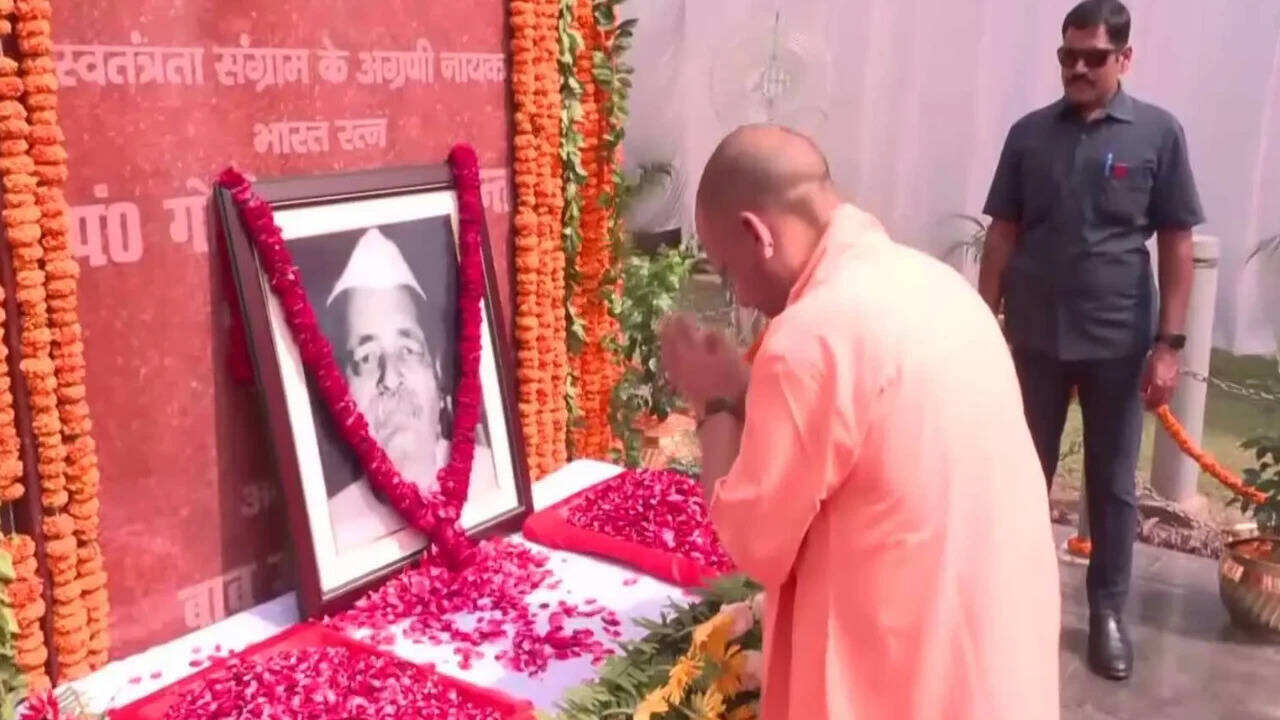
Govind Ballabh Pant remains one of the most influential figures in modern Indian political history. As leaders across the nation reflect on historical contributions, understanding the roots of regional and national governance is essential. Recently, Uttar Pradesh Chief Minister Yogi Adityanath paid rich tributes to Pandit Govind Ballabh Pant on his 139th birth anniversary, commemorating his immense dedication to public service, state building, and India’s independence movement.

Early Life and Education
Born on September 10, 1887, in Almora, Uttarakhand (then part of the United Provinces), Pant exhibited brilliant academic capabilities from an early age. He pursued higher education in law at Allahabad University, where he cultivated a deep sense of justice and patriotism. His academic background served as a strong foundation for his future endeavors in the legal arena and subsequently in nationalist politics.
Political Journey and Freedom Struggle
Pant transitioned into active politics by joining the Indian National Congress. He quickly rose through the ranks due to his sharp intellect and steadfast commitment to the freedom struggle. He actively participated in the Non-Cooperation Movement, the Salt Satyagraha, and the Quit India Movement, facing imprisonment multiple times alongside other prominent national leaders.
Role in the Central Legislative Assembly
Before taking the helm of his home province, Pant made notable contributions as a legislator. He skillfully defended political prisoners and argued fiercely against repressive colonial legislation, earning widespread respect from his peers and adversaries alike.
Governance as Uttar Pradesh’s First CM
Following India’s independence, Govind Ballabh Pant assumed office as the premier (and subsequently the first Chief Minister) of the United Provinces, which was later renamed Uttar Pradesh. His tenure was marked by visionary administrative reforms:
- Abolition of the zamindari system, empowering millions of farmers.
- Introduction of progressive land revenue reforms.
- Focus on primary education and infrastructure development in rural areas.
- Promotion of cooperative societies to support agrarian communities.
National Impact and Home Minister Role
In 1955, Pandit Pant moved to national politics, succeeding Sardar Vallabhbhai Patel (via C. Rajagopalachari and Kailash Nath Katju subsequently) as the Union Home Minister under Prime Minister Jawaharlal Nehru. During his tenure, he played a crucial role in:
- The linguistic reorganization of Indian states.
- The official adoption of Hindi as an official language of the Union.
- Strengthening internal security frameworks during a formative period of the republic.
Recognizing his unparalleled service to the nation, he was honored with the Bharat Ratna, India’s highest civilian award, in 1957.
Tributes and Lasting Legacy
Chief Minister Yogi Adityanath, during the recent commemorative events marking Pant’s 139th birth anniversary, emphasized that the ideals of selfless service championed by leaders like Pant continue to inspire contemporary governance. Statues, public institutions, and hospitals across India bear his name, serving as continuous reminders of his monumental contributions.
Conclusion
The life of Govind Ballabh Pant offers a powerful blueprint for dedicated public leadership. From fighting colonial rule to shaping the administrative framework of Uttar Pradesh and the Indian Union, his legacy endures. Commemorations like his 139th birth anniversary ensure that newer generations remain connected to the foundational pillars of modern Indian democracy.