

Table of Contents
Introduction
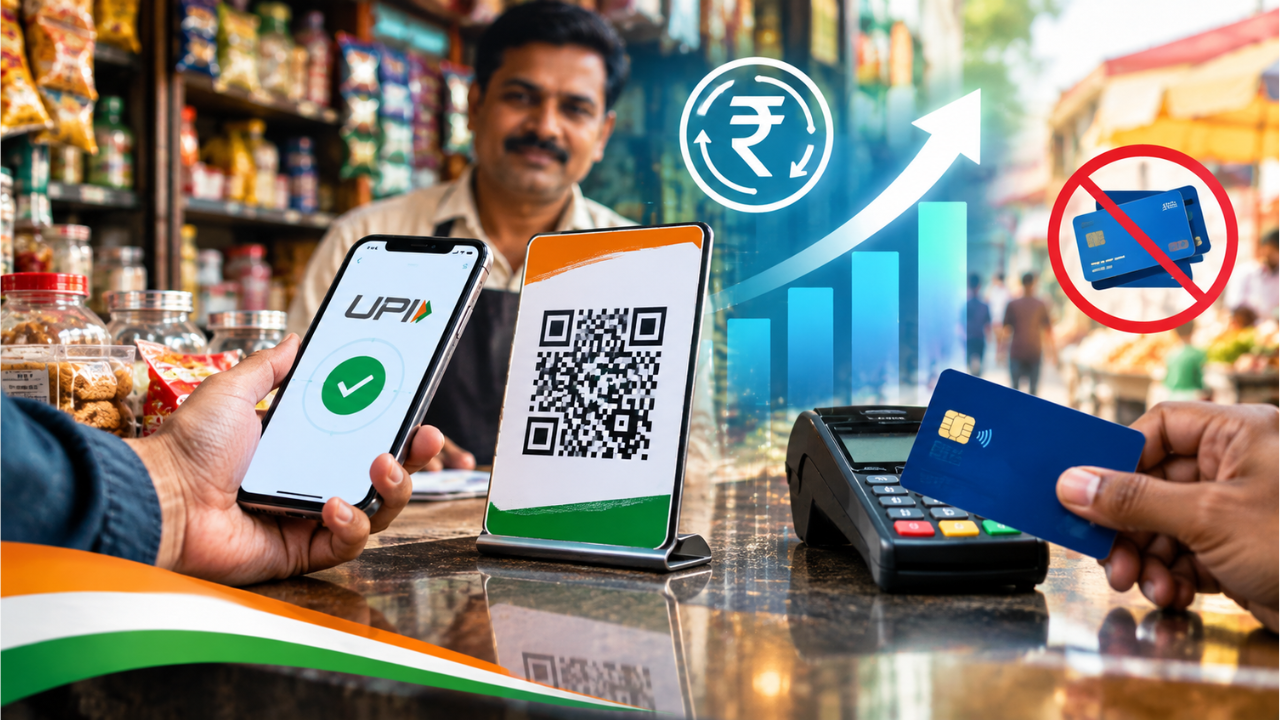
UPI payments have fundamentally transformed how consumers and merchants interact in the financial marketplace. As digital infrastructure evolves, traditional payment instruments face unprecedented competition. The ubiquitous QR code has transitioned from a novelty to the default checkout method for everyday purchases across urban and rural landscapes alike. This paradigm shift prompts a critical evaluation of whether traditional plastic cards are becoming obsolete.
The Rise of UPI in Modern Commerce
Unified Payments Interface has achieved staggering adoption rates, becoming the undisputed leader in retail transactions. Its frictionless user experience, interoperability, and zero-cost framework for basic transactions have propelled it to the forefront of digital commerce. Consumers increasingly rely on instant peer-to-peer and merchant transfers without needing cash or physical cards.
Key Drivers of Digital Adoption
- Instantaneous transaction settlement times.
- Universal interoperability across multiple banking applications.
- Minimal hardware requirements, relying mostly on printed or digital QR codes.
The Changing Role of Debit Cards
While plastic once reigned supreme, debit cards are experiencing a redefined purpose within the financial ecosystem. Rather than serving as the primary medium for retail purchases, debit cards have largely retreated to automated teller machines for cash withdrawal operations. Consumers find scanning a code faster and more convenient than swiping or inserting a chip.
Debit Card Utility Shift
| Function | Historical Usage | Current Usage |
|---|---|---|
| Retail Shopping | High | Low |
| ATM Cash Withdrawals | Moderate | High |
| Online Subscriptions | Low | Moderate |
Credit Cards and Their Specialized Niche
Despite the dominance of instant digital transfers, credit cards have successfully carved out a resilient, specialized segment. Rather than competing directly for micro-transactions at local grocery stores, credit products now focus heavily on high-value retail purchases, travel rewards, and major e-commerce acquisitions.
Why Credit Cards Persist
Consumers continue to favor credit lines for large-scale expenses due to reward programs, fraud protection, and deferred payment structures. Premium cardholders appreciate the insurance benefits and concierge services that standard instant payment platforms do not inherently provide.
RuPay and UPI Integration
A significant milestone in the evolution of Indian fintech is the seamless integration between domestic card networks and instant payment rails. Specifically, RuPay credit cards can now link directly to mobile applications, combining the reward benefits of credit lines with the swift execution of scan-and-pay mechanisms.
Benefits of Network Convergence
This hybrid approach allows users to leverage credit lines at standard merchant locations without carrying physical plastic, bridging the gap between legacy banking infrastructure and modern payment protocols.
Conclusion
The financial landscape is undergoing a structural transformation where instant digital systems take center stage. While cards are not entirely obsolete, their use cases are narrowing significantly. As technology continues to advance, the synergy between card networks and digital rails will likely define the next era of global commerce.