

Table of Contents
- Introduction
- The Discovery Context
- ASI Investigation and Material Analysis
- Historical Significance and Lakhori Bricks
- Differing Public and Community Claims
- Conclusion
Introduction
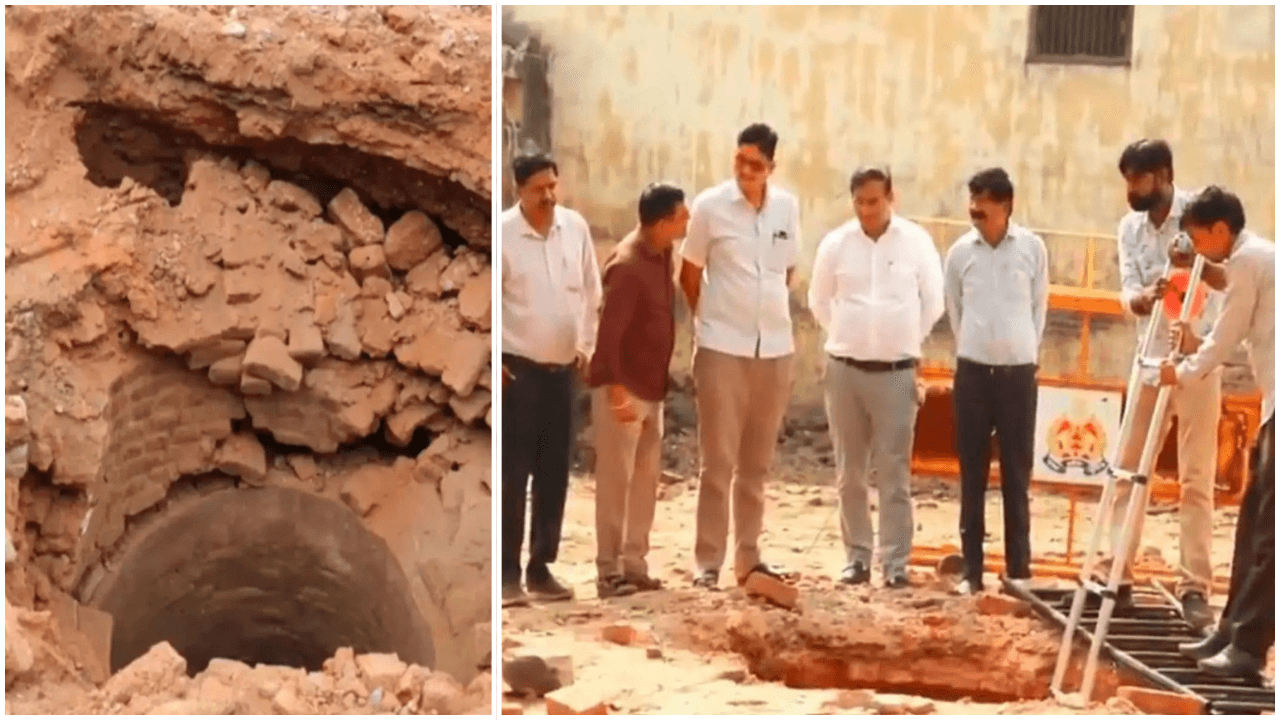
The ASI well discovery in Saharanpur has sparked significant historical and archaeological interest across the region. When an ancient well emerged from beneath the rubble following a mosque demolition, experts rushed to uncover its origins. Archaeological experts are currently examining material samples to determine the exact age and cultural context of this subterranean structure, providing a fascinating look into the region’s layered history.
The Discovery Context
The structure came to light during routine debris removal operations on a Sunday. Workers clearing the site of a recently demolished mosque noticed unusual masonry hidden beneath layers of earth and building materials. Local authorities quickly cordoned off the area to prevent damage to the artifact while notifying heritage preservation departments.
Key details regarding the initial finding include:
- Discovered on a Sunday during debris clearance.
- Located directly beneath the demolished structure’s foundation rubble.
- Prompted an immediate response from heritage preservation authorities.
Understanding the Local Geography
Saharanpur boasts a rich history intertwined with various architectural epochs. Discoveries of hidden wells, baolis, and ancient foundations are not uncommon during excavations in older urban settlements. However, finding such a feature directly linked to a religious site demolition has amplified public scrutiny and scholarly interest alike.

ASI Investigation and Material Analysis
Following the initial report, a specialized team from the Archaeological Survey of India (ASI) was deployed to the site. Their primary objective is to conduct a scientific evaluation of the well’s construction techniques, depth, and material composition. By analyzing mortar samples and brick types, researchers hope to place the structure accurately on the historical timeline.
Preliminary measurements indicate that the shaft reaches a depth of approximately twenty feet. The walls exhibit distinct architectural characteristics typical of historic masonry traditions found in Northern India.
Brick Typology and Architecture
The structural integrity of the find relies heavily on its unique building materials. Experts have noted the prominent use of specialized bricks in the construction of the shaft walls.
| Feature | Description |
|---|---|
| Depth | Approximately twenty feet |
| Primary Material | Traditional Lakhori bricks |
| Condition | Relatively well-preserved beneath rubble |
Historical Significance and Lakhori Bricks
The utilization of Lakhori bricks is a vital clue in dating the structure. Commonly used during the Mughal era and the late medieval period in India, these thin, kiln-baked bricks are hallmarks of regional architecture. The ASI team is carefully extracting mortar and brick fragments to perform carbon dating and luminescence testing.
Understanding the chronology of this hidden water source helps historians map out older settlement patterns before modern urban development reshaped the landscape. Similar architectural studies can be explored further in our guide on archaeological preservation in Northern India.

Differing Public and Community Claims
As news of the excavation spread, various community groups and local stakeholders put forward competing claims regarding the site’s historical identity. While historians advocate for a purely scientific and archaeological approach, local factions have voiced divergent opinions about the cultural heritage represented by the findings.
Authorities have urged calm and cooperation, emphasizing that only rigorous scientific analysis by the ASI can provide definitive answers regarding the origin and purpose of the subterranean structure.
Balancing Preservation and Public Sentiment
Managing public expectations during high-profile archaeological finds requires transparency and adherence to established heritage laws. Government officials continue to monitor the site closely to ensure that no unauthorized digging or tampering occurs while the official study is underway.
Conclusion
The recent findings surrounding the ancient brick structure highlight the complex layers of history embedded beneath modern urban landscapes. Through meticulous scientific analysis, the Archaeological Survey of India aims to clarify the timeline and historical context of this deep water source. As investigations proceed, the community awaits conclusive reports that will shed light on Saharanpur’s architectural past.