
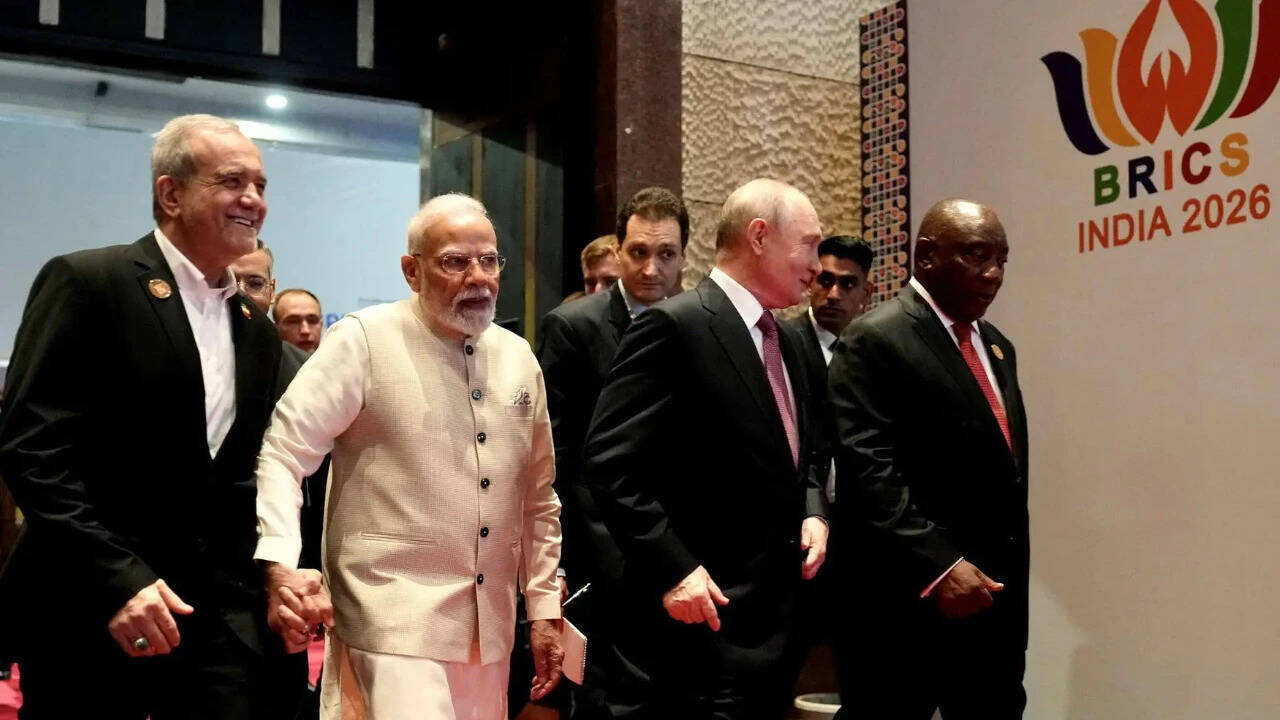

BRICS summit discussions recently took an intense turn as BRICS summit diplomacy was severely tested by high-ranking international speeches. During the high-profile BRICS Business Forum, leaders from Moscow and Tehran launched vehement critiques against Western sanctions and foreign policies. This diplomatic friction placed the primary summit host, India, in a delicate balancing act as it navigated competing global interests on an international stage.
Table of Contents
BRICS Summit Dynamics and Western Pressure
The contemporary geopolitical landscape is witnessing a profound shift in multilateral organizations. As emerging economies seek to redefine global governance, platforms like the BRICS alliance have grown increasingly influential. However, this growth brings internal complexities, particularly when member states use the platform to air deep-seated grievances against traditional Western powers.
During the latest forum, the rhetoric escalated significantly. Both Russia and Iran, nations currently grappling with extensive international sanctions, utilized the global platform to denounce what they described as unilateral coercion and economic aggression. Their collective stance presents a formidable challenge for host nations attempting to maintain a cooperative, economically focused agenda.

Iranian Perspective on Economic Security
Iranian leadership placed strong emphasis on the intrinsic link between financial stability and overall geopolitical security. Iranian President Pezeshkian addressed the delegates, arguing that modern sovereignty is deeply intertwined with a nation’s ability to withstand external financial shocks.
Key points from the Iranian address included:
- The direct correlation between economic insulation and national security.
- The necessity for regional partnerships to mitigate the impact of unilateral restrictions.
- A call for deeper integration among developing nations to protect critical supply chains.
By framing economic security as a fundamental pillar of state survival, Tehran sought to rally fellow bloc members toward a more unified defensive economic posture.
Russian Critique of Western Dominance
Echoing these sentiments, Russian leadership delivered a sharp condemnation of Western hegemony. Russian officials targeted what they termed infrastructure destruction and unfair market dominance tactics employed by traditional financial superpowers.

Moscow argued that the weaponization of global financial networks necessitates a rapid pivot toward alternative systems. According to Russian representatives, the international community can no longer rely on a singular, Western-dominated monetary framework without exposing themselves to severe vulnerability.
India’s Diplomatic Tightrope as Host
Hosting a major international summit requires a delicate balancing act, especially when polarizing geopolitical actors are involved. As the primary host nation, India faced the intricate task of keeping the multilateral dialogue focused on inclusive growth, sustainable development, and global trade.
While acknowledging the concerns raised by Moscow and Tehran, New Delhi consistently emphasized the need for constructive engagement rather than confrontational rhetoric. This approach underscores India’s strategic autonomy, allowing it to maintain strong diplomatic ties with Western democracies while engaging productively with nations under heavy sanctions.
Financial Resilience and Local Currencies
Beyond the diplomatic friction, the forum yielded concrete discussions regarding financial architecture. Member states actively explored strategies to enhance mutual resilience against external pressures. Central to these talks were proposals aimed at:
- Expanding bilateral trade utilizing national currencies rather than traditional dominant fiat systems.
- Leveraging the New Development Bank to finance sustainable infrastructure projects across the Global South.
- Establishing independent payment mechanisms to bypass traditional Western clearing houses.
| Initiative | Primary Objective | Potential Impact |
|---|---|---|
| Local Currency Trade | Reduce reliance on traditional global currencies | Lowers transaction costs and mitigates sanction risks |
| New Development Bank | Fund infrastructure in developing nations | Provides alternative financing independent of Western institutions |
| Payment Systems | Create secure cross-border clearing channels | Enhances financial sovereignty for targeted nations |
Conclusion
The recent diplomatic gatherings underscore the evolving and sometimes turbulent nature of modern international relations. While differing priorities among member states create considerable diplomatic challenges for hosts like India, they also highlight the growing determination of emerging economies to forge alternative paths for global commerce and financial security. As these nations continue to push for structural reforms, the international financial landscape is bound to experience profound transformations in the coming years.