

Table of Contents
Introduction
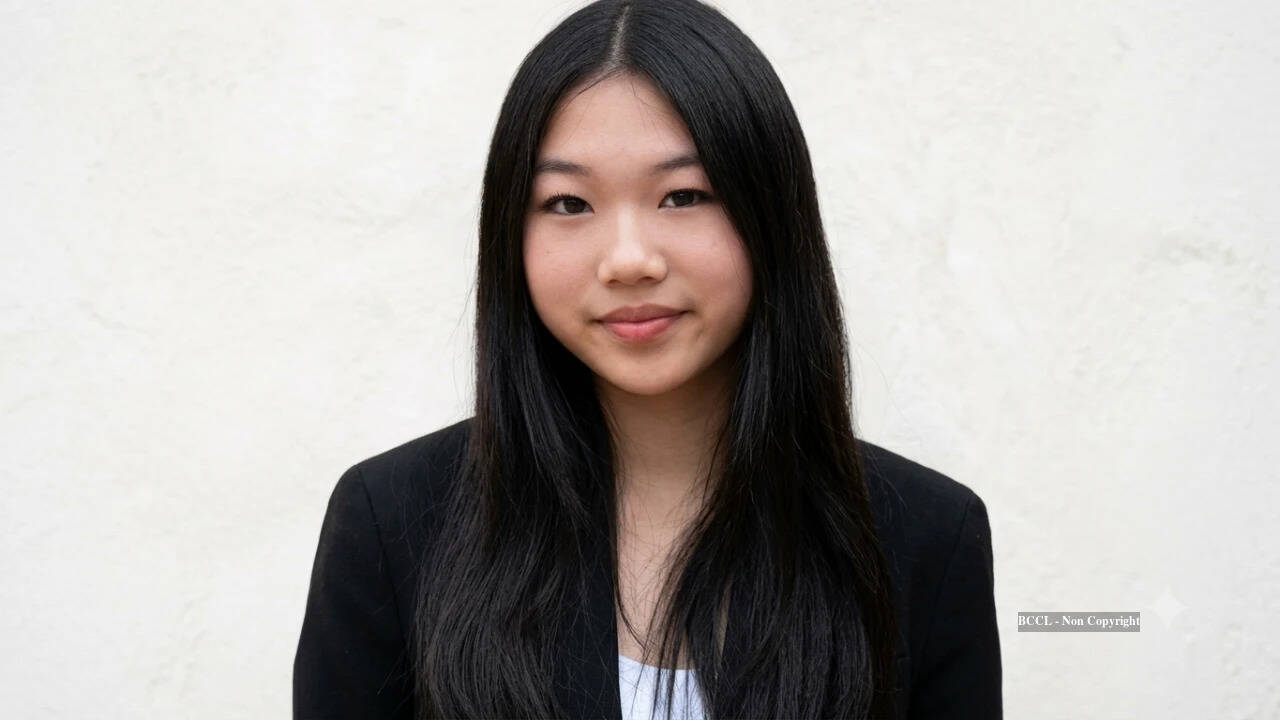
Kelly Liu is a remarkable 16-year-old student from San Jose who has captured national attention by leveraging advanced technology for environmental justice. Through a combination of determination, scientific inquiry, and modern computing, Kelly Liu successfully utilized artificial intelligence to map dirty air and spearheaded critical environmental reforms. Her grassroots initiative demonstrates how young innovators can effectively tackle systemic urban challenges and protect vulnerable communities from invisible environmental hazards.
Air pollution remains a persistent public health crisis in many urban centers across the United States. While city-wide averages might suggest acceptable air quality, localized disparities often expose marginalized neighborhoods to dangerously high levels of toxins and particulate matter. Recognizing this critical gap in environmental monitoring, Kelly decided to take matters into her own hands, transforming complex data analytics into a powerful instrument for tangible civic change.

The Genesis of the Project
Every significant environmental breakthrough begins with careful observation. For Kelly, the journey started after noticing stark differences in environmental conditions across various districts in her home region of San Jose. Traditional monitoring stations managed by government agencies were often sparsely distributed, leaving wide blind spots in densely populated or economically disadvantaged areas.
Motivated by a desire to understand the true scope of the problem, Kelly immersed herself in environmental science literature and data science tutorials. She realized that existing monitoring frameworks failed to capture hyper-local variations caused by heavy traffic corridors, industrial zones, and geographic wind patterns. This realization laid the groundwork for an ambitious student-led investigation into localized air toxicity.
Leveraging Artificial Intelligence
To process vast quantities of environmental data, Kelly turned to modern computational tools. Leveraging artificial intelligence allowed her to analyze complex atmospheric datasets that would typically require enterprise-level research budgets and teams of professional scientists.
- Data Collection: Gathering raw environmental metrics from satellite imagery and public meteorological databases.
- Machine Learning Models: Training predictive algorithms to identify pollution hot spots based on traffic density and weather conditions.
- Predictive Mapping: Generating high-resolution visual maps illustrating pollutant dispersion across different neighborhoods.
By transforming raw numbers into intuitive, color-coded visual representations, Kelly created a compelling narrative that resonated with both everyday residents and local government officials. Her AI-driven approach eliminated guesswork, providing undeniable evidence of environmental inequities.

Deploying Sensors in Underserved Schools
Recognizing that digital models required physical validation, Kelly expanded her project beyond the computer screen. She orchestrated a grassroots campaign to install affordable air quality sensors directly inside underserved schools throughout her county. Children and adolescents are particularly vulnerable to the long-term health consequences of particulate matter, making school environments critical monitoring sites.
| Project Phase | Action Taken | Primary Objective |
|---|---|---|
| Phase 1 | Algorithm Development | Build predictive air quality maps using machine learning. |
| Phase 2 | Hardware Deployment | Install physical particulate sensors in local schools. |
| Phase 3 | Policy Advocacy | Present verified findings to county lawmakers. |
The deployment of these physical sensors bridged the gap between theoretical modeling and empirical reality. The live data streams collected from the school campuses consistently validated the AI-generated predictions, revealing alarming spikes in air pollution during peak commuting hours directly adjacent to playgrounds and classrooms.
Driving Countywide Policy Change
Armed with robust empirical data and compelling visualizations, Kelly took her findings directly to policymakers. She presented her research at municipal hearings and county board meetings, translating complex technical metrics into persuasive arguments for legislative reform.
Her advocacy did not go unnoticed. Local officials, moved by the rigor of her student-led research and the urgency of protecting student health, embraced her recommendations. The county subsequently initiated formal policy revisions, allocating resources for enhanced urban forestry, stricter emissions monitoring near educational facilities, and expanded public reporting requirements for industrial polluters.

Conclusion
Kelly Liu’s inspiring achievement illustrates the profound impact that youth-led scientific inquiry can have on modern society. By combining artificial intelligence with community-based activism, she not only mapped environmental hazards but also catalyzed permanent countywide policy changes. Her story serves as a powerful reminder that technological innovation, when paired with social consciousness, can build safer, healthier, and more equitable communities for everyone.