

Table of Contents
Introduction to the AIIMS Delhi Population Clock
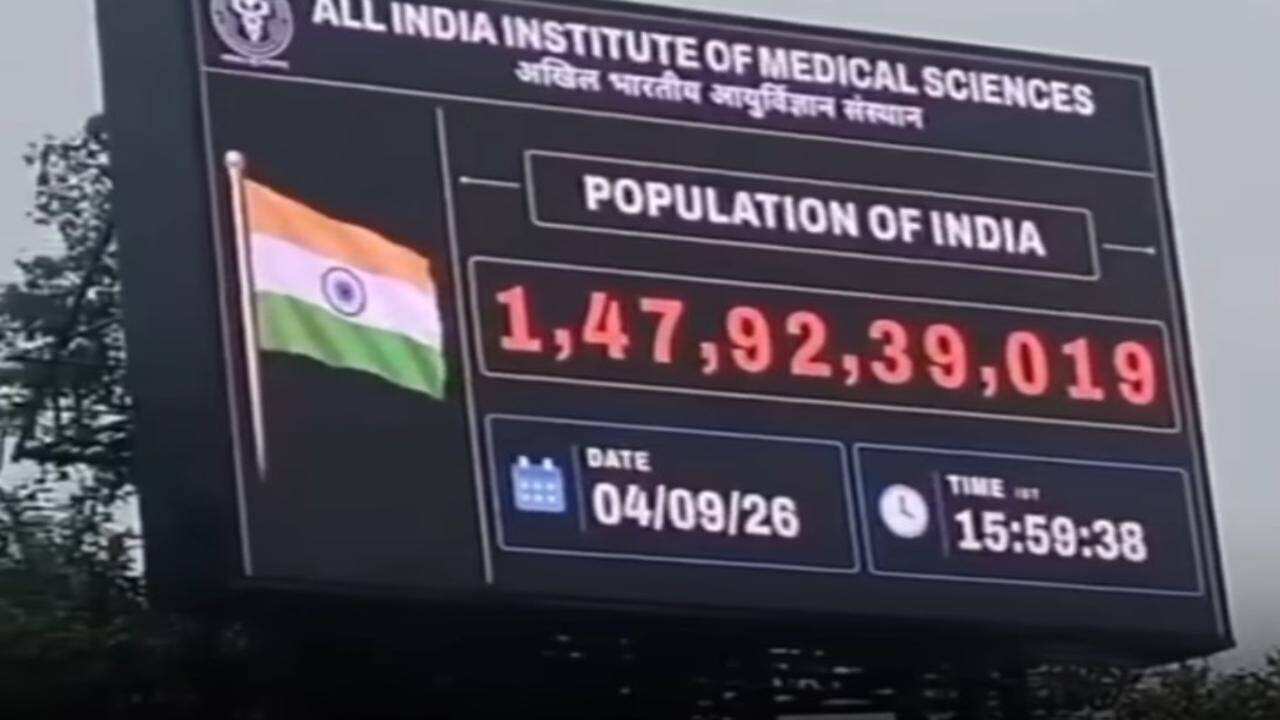
The AIIMS Delhi population clock has recently captured public attention, sparking widespread curiosity across digital platforms. Located at one of India’s premier medical institutions, this digital monument provides an ongoing visual representation of the nation’s demographic expansion. Many observers wonder how such a display functions and whether it tracks every new arrival instantaneously. Understanding the mechanisms behind this viral exhibit reveals a fascinating intersection of public health, statistics, and educational outreach.
How the AIIMS Delhi Population Clock Works
Projections Versus Real-Time Tracking
A common misconception regarding the AIIMS Delhi population clock is that it monitors live hospital births across the country second by second. In reality, no single digital screen possesses the capability to log every birth and death occurring simultaneously across a nation of over 1.4 billion people. Instead, the installation relies on sophisticated demographic projections, established growth rates, and statistical models derived from comprehensive census data.
The Role of Mathematical Modeling
Demographic experts utilize historical trends and fertility rates to program these clocks. By applying established annual growth percentages, the display continuously updates its numbers to reflect estimated totals. This methodology ensures that while the numbers tick upward smoothly, they represent calculated statistical estimates rather than direct, real-time telemetry from delivery rooms.
Understanding Demographic Data Sources
Official Government Statistics
To maintain accuracy, displays like the AIIMS Delhi population clock anchor their projections in credible institutional data. Key sources include:
- The Sample Registration System (SRS) administered by the Government of India.
- Periodic national health and family survey reports.
- Long-term population censuses and UN demographic projections.
Civil Registration Systems
Official records governing vital statistics rely on civil registration systems. Hospitals, local municipalities, and village panchayats log births and deaths locally, which are later compiled into comprehensive national databases. Because administrative compilation takes time, real-time updates remain mathematically modeled rather than empirically recorded instant by instant.
The Educational Impact of Demographic Displays
Beyond raw numbers, public installations serve a profound educational purpose. They encourage students, patients, and visitors to contemplate broader socio-economic themes, resource distribution, and public health policies. Visualizing growth on a massive scale fosters heightened public awareness regarding sustainable development and demographic shifts.
Conclusion
The AIIMS Delhi population clock stands as an impressive educational tool that brings national statistical trends into the public eye. While it does not track individual newborns in real-time, it effectively highlights the scale of India’s demographic journey. By blending science, public health, and statistics, such exhibits inspire vital conversations about the future.