

Table of Contents
Introduction
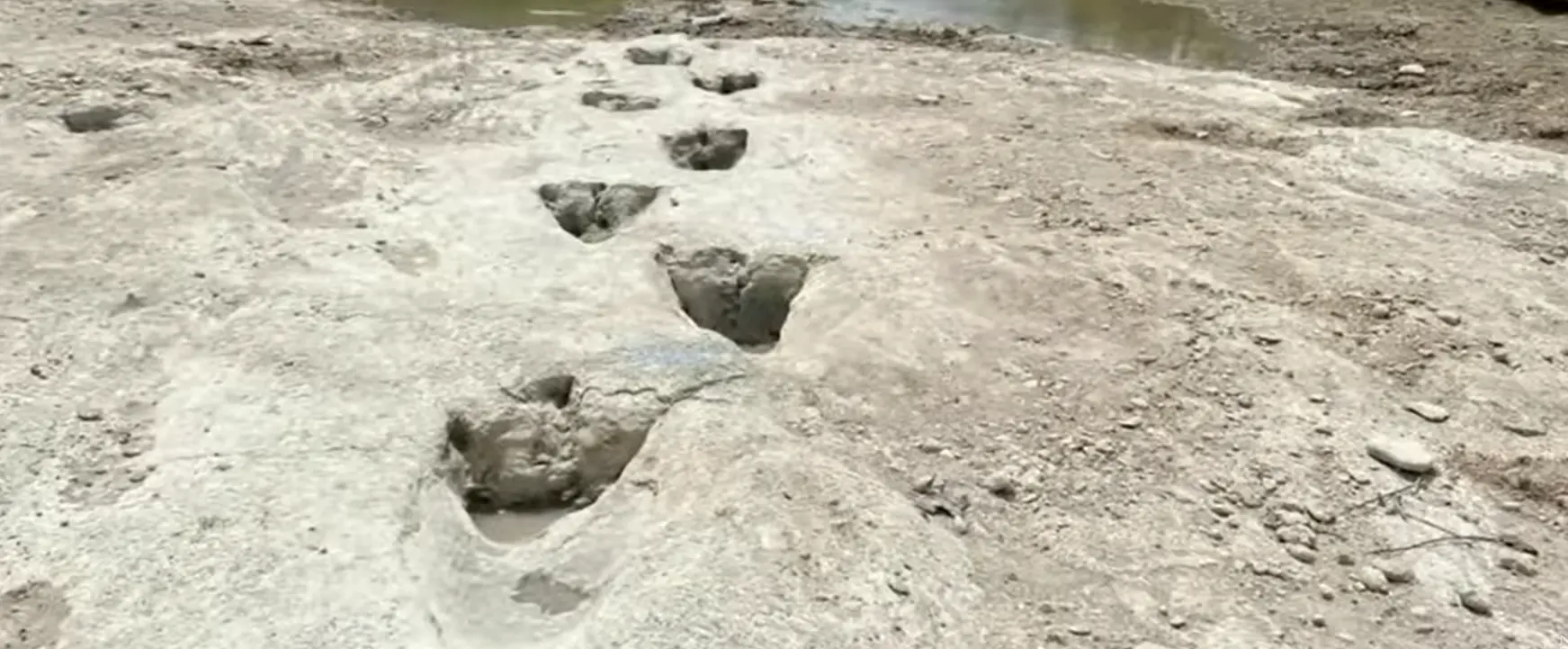
Tyrannosaurus rex remains one of the most thoroughly studied and culturally iconic creatures in Earth’s history. For generations, popular culture and scientific speculation debated the locomotion of this apex predator. Recent paleontological discoveries have provided groundbreaking insights. Specifically, fossilized footprints indicate that a Tyrannosaurus rex walked across North America approximately 66.5 million years ago. These rare tracks offer tangible evidence regarding how these massive theropods moved through their prehistoric environments, challenging long-held assumptions about their speed and agility.
Decoding Tyrannosaurus rex Tracks
Finding trace fossils, such as footprints and trackways, is exceedingly rare for large carnivorous dinosaurs. While skeletal remains are relatively well-documented, individual foot impressions provide dynamic behavioral clues that bones alone cannot convey. Paleontologists examine stride length, depth, and sediment deformation to reconstruct the animal’s mass and speed.
The Science of Trace Fossils
Trace fossils record behavior in real-time rather than simply preserving anatomical structure. By analyzing the spacing between successive steps, researchers can calculate approximate travel speeds using established biomechanical formulas. The newly studied trackway from North America preserves distinct impressions of massive three-toed feet, perfectly matching the expected morphology of a late Cretaceous tyrannosaurid.
Walking Versus Running Mechanics
One of the most significant revelations from these trackways involves the walking habits of the giant predator. Popular media often depicts these creatures sprinting at high velocities to chase prey. However, biomechanical constraints suggest a different reality.
- Massive Body Weight: An adult weighed several tons, placing immense stress on skeletal structures during rapid movement.
- Energy Conservation: Walking allowed these predators to cover vast territories efficiently without risking catastrophic bone fractures.
- Trackway Analysis: Spacing in the fossil tracks confirms a steady, measured stride rather than a frantic sprint.
Researchers note that while these dinosaurs were capable of moderate movement speeds, sustained running was likely uncommon for fully grown adults. Instead, they relied on endurance walking and strategic ambush tactics.
The Ancient North American Landscape
The environment traversed by these magnificent creatures was vastly different from modern North America. During the late Cretaceous period, the continent was divided by the Western Interior Seaway, creating diverse coastal plains, swamps, and lush forests.
| Environmental Feature | Cretaceous Period | Modern Era |
|---|---|---|
| Climate | Warm, sub-tropical | Varied climate zones |
| Sea Levels | Significantly higher | Standard continental borders |
| Flora | Ferns, conifers, early flowering plants | Diverse modern vegetation |
Navigating this complex ecosystem required high adaptability. The physical evidence left behind in the mud and sediment helps scientists paint a vivid picture of a day in the life of Late Cretaceous fauna.
Conclusion
The discovery of ancient trackways provides an invaluable window into the prehistoric world. By confirming that a Tyrannosaurus rex walked rather than constantly ran across North America, scientists continue to refine our understanding of dinosaur biology and behavior. These findings bridge the gap between static skeletal mounts and dynamic living animals, enhancing our appreciation of Earth’s ancient history.