

Table of Contents
Introduction
Sericulture is rapidly transforming from a traditional agricultural practice into a vibrant avenue for academic entrepreneurship. At the heart of this evolution is the remarkable rise of sericulture start-up initiatives led by creative young minds looking to redefine modern education. When students step beyond the boundaries of standard textbooks to build real-world enterprises, remarkable innovations emerge. This is precisely what unfolded at a prestigious institution in Kerala, where academic curiosity met industrial ambition to create something truly extraordinary.

The Birth of V-Weave
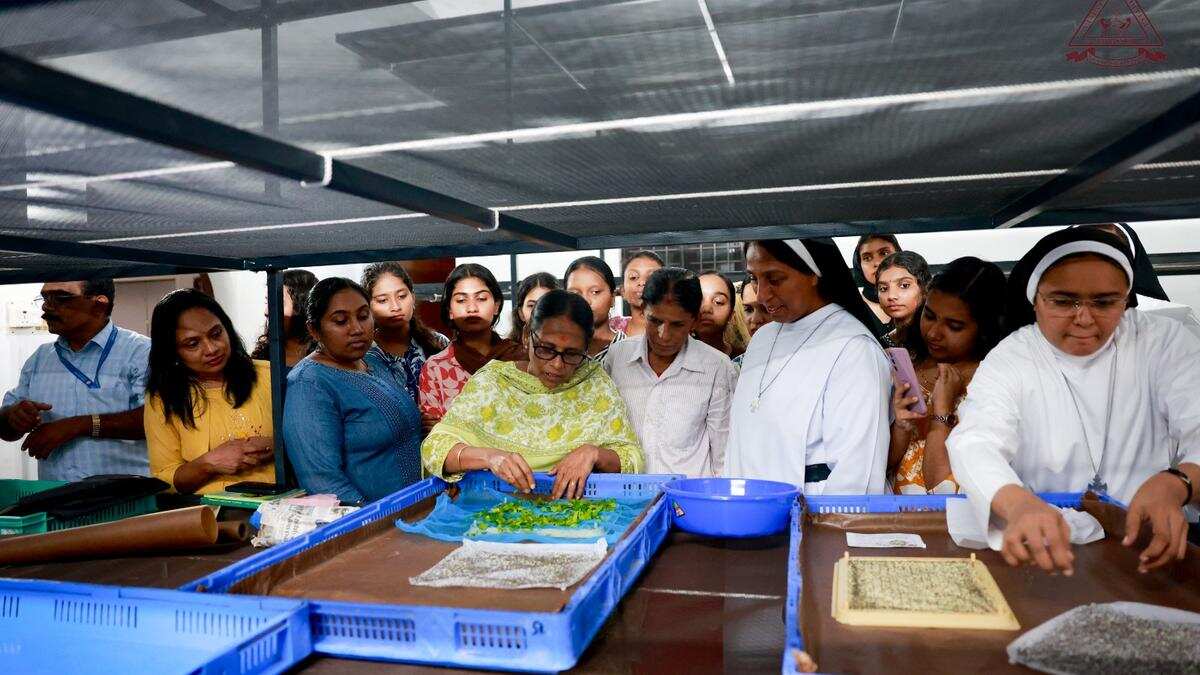
The journey began when enthusiastic zoology learners decided to channel their scientific knowledge into a commercial enterprise. Named ‘V-Weave,’ this unique campus venture represents a bold leap from theoretical biology to tangible textile creation. By integrating academic learning with hands-on enterprise, the initiative aims to master the complete value chain of silk production.
Hands-On Sericulture Science
Understanding silk requires deep insight into the lifecycle of the silkworm, scientifically known as Bombyx mori. The student founders manage every biological phase meticulously, ensuring optimal health and growth conditions for the larvae. Key responsibilities include:
- Maintaining precise temperature and humidity controls in rearing facilities.
- Sourcing fresh, high-quality mulberry leaves for daily feeding.
- Monitoring larval development stages through multiple instars.
- Harvesting healthy cocoons at the exact optimal time before emergence.
From Cocoon to Campus Couture
The ultimate vision of the enterprise extends far beyond raw cocoon cultivation. Members of the project aspire to process, spin, dye, and eventually weave these harvested cocoons into exquisite silk sarees. This transition from raw agricultural output to finished fashion apparel highlights the immense potential of value addition in student-led business models.

Educational and Economic Impact
The implications of establishing a functional sericulture start-up within an academic setting stretch wide and deep. Modern educationists constantly advocate for practical skill acquisition alongside traditional degrees. Projects like this provide a robust framework for experiential learning, ensuring graduates possess both theoretical mastery and operational competence.
Bridging Academia and Industry
Traditional classrooms often struggle to replicate the fast-paced challenges of commercial markets. By launching a viable enterprise, these learners encounter real-world hurdles such as quality control, supply chain management, and market positioning firsthand. For further reading on modern academic initiatives, visit our education category or explore our guide on student entrepreneurship models.
Empowering Student Entrepreneurs
Financial independence and self-reliance form core pillars of contemporary higher education. Through active participation in commercial silk production, participants gain critical financial literacy. They learn how to budget operational expenses, project future revenues, and pitch sustainable business concepts to potential stakeholders.
| Project Phase | Key Activities | Expected Outcome |
|---|---|---|
| Rearing | Feeding and monitoring silkworms | High-grade cocoon harvest |
| Processing | Reeling and degumming filaments | Durable raw silk yarn |
| Couture | Designing and handloom weaving | Finished campus-made sarees |
Future Prospects and Vision
Looking ahead, the founders plan to expand their operational capacity and diversify their product portfolio. Collaborations with local master weavers and textile designers are already underway to refine their craftsmanship. Moreover, workshops are being planned to train junior batches, ensuring the long-term sustainability of the enterprise.
Conclusion
The inspiring journey of these young innovators demonstrates that academic institutions can serve as powerful incubators for commercial success. By successfully merging biological science with textile art, the sericulture start-up has laid a solid foundation for future student-led enterprises. Their dedication proves that with the right blend of knowledge, passion, and perseverance, even a humble silkworm cocoon can inspire magnificent dreams.