
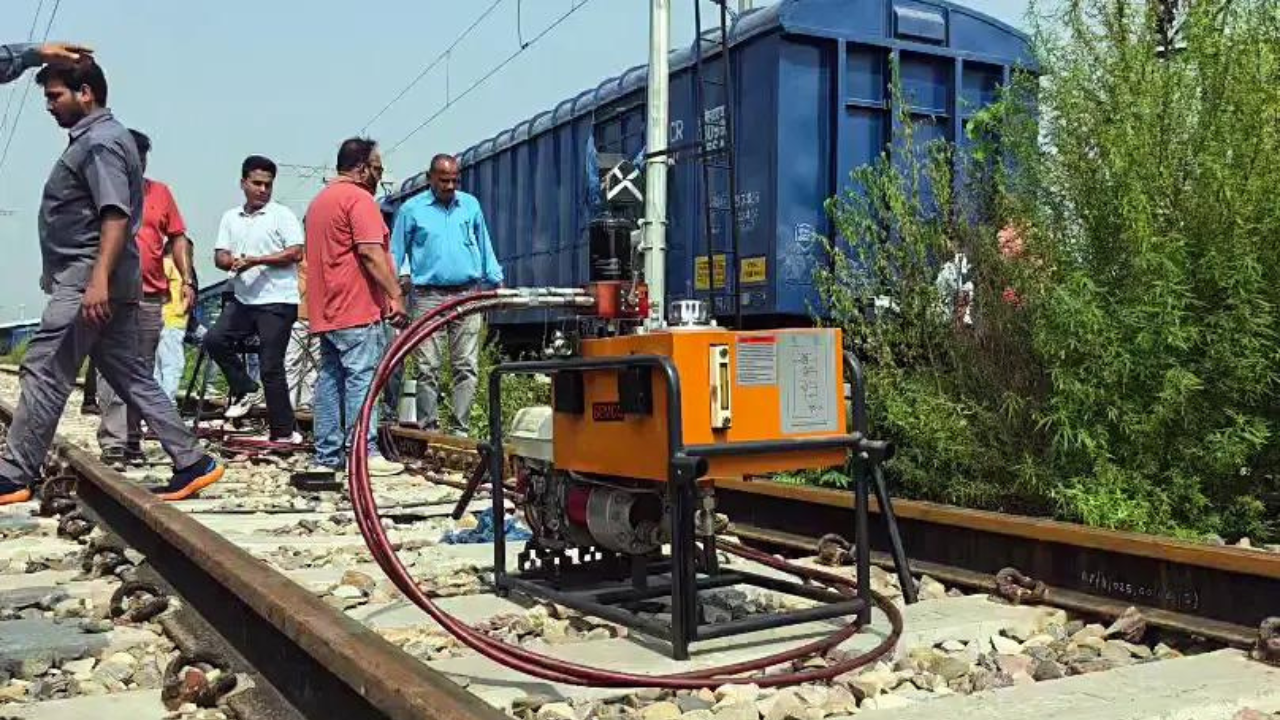

When a train derailment in Kathua occurs, it instantly sparks nationwide discussions regarding railway safety, infrastructure resilience, and passenger security. Fortunately, recent reports confirm that an unexpected freight train incident in the Kathua district of Jammu and Kashmir concluded without any injuries, casualties, or severe structural damage. However, such occurrences serve as critical reminders of the ongoing challenges faced by railway networks operating in geographically complex and sensitive regions.
Table of Contents
1. Overview of the Kathua Freight Incident
The unexpected disruption took place when several wagons of a goods train slipped off the tracks in the Kathua region. Because the vehicle was a freight carrier rather than a passenger service, the potential for catastrophic human loss was significantly minimized. Local railway authorities and technical teams were dispatched immediately to the location to assess the scene and initiate restoration efforts.
Initial assessments highlighted that the incident caused temporary delays to other rail movements along the critical route, but swift administrative action prevented prolonged blockages. Engineers focused heavily on clearing the tracks and analyzing the mechanical and environmental factors that might have contributed to the derailment.
Immediate Technical and Administrative Response
Railway administration works under stringent timelines during such unexpected events. Key steps taken included:
- Immediate dispatch of accident relief trains and specialized engineering units.
- Coordination with local district administration to secure the perimeter.
- Rapid assessment of track geometry and wheel-rail interaction.
2. Railway Infrastructure and Challenges in J&K
Operating railway networks through Jammu and Kashmir involves navigating unique topographical and climatic hurdles. The terrain frequently features steep gradients, sharp curves, tunnels, and bridges exposed to shifting weather conditions, ranging from heavy monsoon rains to freezing winter temperatures.
Maintaining absolute precision in track maintenance is vital. Railway authorities invest heavily in continuous monitoring systems, ultrasonic flaw detection of rails, and slope stabilization projects to mitigate risks associated with rockfalls and soil erosion.
Geographical and Weather Impact
The topography of northern India demands specialized engineering marvels. Below is a summary of typical environmental factors affecting rail transport in the region:
| Factor | Potential Challenge | Mitigation Strategy |
|---|---|---|
| Topography | Steep gradients and sharp curves | Speed restrictions and advanced braking systems |
| Weather | Heavy rainfall and landslides | Retaining walls and continuous slope monitoring |
| Temperature | Extreme seasonal fluctuations | Thermal expansion joint management |
3. Emergency Response and Safety Protocols
Modern railway management relies on robust standard operating procedures designed to kick in the moment an anomaly is detected. During the Kathua incident, these protocols ensured that communication lines between station masters, control rooms, and engineering teams remained unhindered.
Regular safety audits, mock drills, and upgrading signaling systems to modern electronic interlocking standards form the backbone of Indian Railways’ strategy to reduce untoward incidents to an absolute minimum.
4. Broader Implications for National Rail Safety
While the absence of injuries in this specific event is a relief, every track deviation provides valuable data for safety analysts. Modernizing logistics corridors and expanding freight networks require synchronized upgrades in track maintenance technology, driver training, and automated monitoring sensors.
As infrastructural projects expand connectivity across the country, prioritizing proactive maintenance over reactive repairs remains the cornerstone of modern transportation policy.
Conclusion
The recent train derailment in Kathua stands as an important case study in efficient emergency management and the resilience of regional transport corridors. With zero injuries and prompt restoration of services, the incident underscores the effectiveness of current safety frameworks while highlighting the continuous need for rigorous infrastructure oversight in challenging terrains.