

Table of Contents
Introduction
The mysterious depths of our planet’s oceans continue to baffle and amaze marine biologists. Recently, the stunning identification of a new marine species brought international attention to Central America. At the heart of this phenomenal breakthrough is the Costa Rica ghost shark, an elusive cartilaginous fish that has lived hidden away from human eyes in the pitch-black waters off the coast. Marine researchers and conservationists alike celebrate this monumental finding as a leap forward in understanding deep-sea biodiversity.
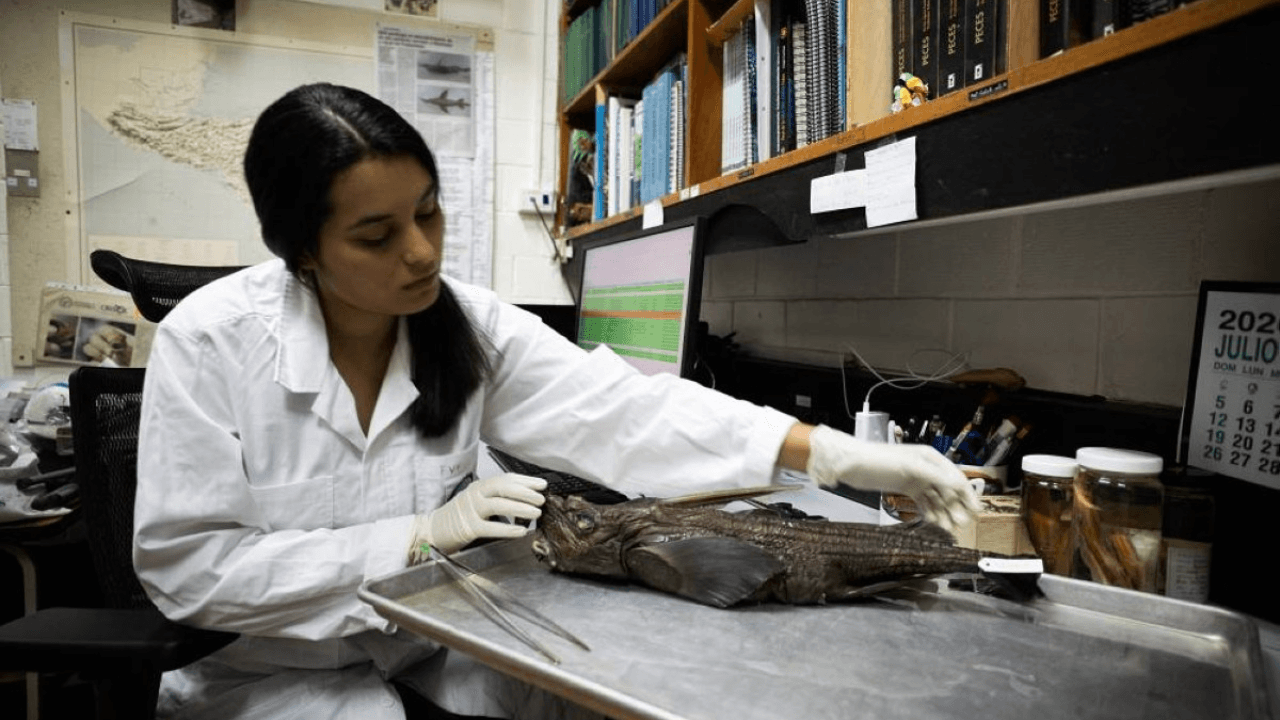
Behind every major scientific milestone lies the dedication of brilliant researchers. In this instance, scientific trailblazer Naidely Valeria Vidaurre Quesada played a pivotal role in bringing this remarkable creature to light. Through rigorous exploration, technological innovation, and an unwavering passion for ocean conservation, her contributions have forever altered our knowledge of marine ecosystems. This comprehensive overview explores the journey of discovering the ghost shark, the challenges of deep-sea exploration, and why this finding matters for the future of our oceans.
The Discovery of the Costa Rica Ghost Shark
Finding a new species in the vast expanses of the deep sea is akin to searching for a microscopic grain of sand across an entire continent. The Costa Rica ghost shark thrives in the bathypelagic zone, where sunlight cannot penetrate, temperatures hover near freezing, and hydrostatic pressure is immense. Researchers utilizing advanced remotely operated vehicles (ROVs) managed to capture footage and specimen data that confirmed the existence of this unique chimaera.
Chimaeras, commonly referred to as ghost sharks, are distant relatives of modern sharks and rays. They separated from their shark lineage roughly 400 million years ago, making them some of the oldest surviving jawed vertebrates on Earth. Unlike typical sharks with replaceable rows of sharp teeth, ghost sharks possess permanent tooth plates specialized for crushing hard-shelled prey like crabs and mollusks.
Key Characteristics of the New Species
While formal taxonomic descriptions take time, initial observations indicate several unique morphological traits that distinguish this regional specimen from other known chimaeras. Key features include:
- Unusually large, reflective eyes designed to capture bioluminescent signals in total darkness.
- A distinct coloration pattern that provides camouflage against the abyssal plain.
- Unique sensory lateral line systems capable of detecting minute electrical fields generated by prey.
- Skeletal structures composed entirely of cartilage rather than bone.
Behind the Science with Naidely Valeria Vidaurre Quesada
The journey toward cataloging the Costa Rica ghost shark required immense dedication, field expertise, and analytical precision. Naidely Valeria Vidaurre Quesada emerged as a central figure in coordinating the research efforts that verified the species. Working alongside international marine institutes, her team analyzed high-definition video feeds, physical tissue samples, and environmental DNA (eDNA) traces.
Scientific exploration in Latin American waters has seen a remarkable surge in recent decades, with local researchers taking the lead in protecting their native marine environments. Vidaurre Quesada’s work underscores the importance of regional scientific leadership. By combining traditional taxonomy with modern genetic sequencing, her team ensured that the classification of the ghost shark met the highest international standards of marine biology.
Methodology in Deep-Sea Research
Investigating creatures that dwell thousands of meters below the surface demands specialized tools. The research workflow typically involves:
- Deploying deep-diving submersibles equipped with robotic arms and 4K cameras.
- Collecting non-destructive environmental samples to map biodiversity without disturbing fragile habitats.
- Collaborating with global taxonomic experts to cross-reference genetic databases.
Understanding Ghost Sharks and Their Deep-Sea Habitat
To truly appreciate the significance of the Costa Rica ghost shark, one must understand the environment it calls home. The deep sea is often viewed as a desolate wasteland, but it actually hosts complex ecosystems driven by marine snow, hydrothermal vents, and specialized predatory networks.
Ghost sharks occupy a niche near the top of the benthic food web in their domain. Because food is scarce in the abyss, their slow metabolism allows them to survive on sporadic meals. However, this slow life history also makes them exceptionally vulnerable to environmental disruptions and human-induced pressures.
Conservation Challenges in the Abyssal Zone
Although the deep sea feels safely isolated from human activity, mounting pressures threaten even the most remote marine zones. Deep-sea fishing, potential mineral mining, and global climate change pose significant risks to fragile habitats like those where the Costa Rica ghost shark resides.
Rising ocean temperatures and shifting oxygen minimum zones can drastically alter the delicate chemical balance of bathypelagic waters. Conservationists hope that the official documentation of unique species will spur governments to establish stricter marine protected areas. Recognizing the ecological value of these waters is the first step toward safeguarding them for future generations.
Conclusion
The identification of the Costa Rica ghost shark marks a triumph for modern marine science and highlights the incredible dedication of researchers like Naidely Valeria Vidaurre Quesada. As humanity continues to probe the final frontiers of our own planet, each new discovery reminds us of how much remains unknown. Protecting these deep-water marvels is not just about preserving a single species; it is about maintaining the intricate balance of global marine ecosystems for years to come.