
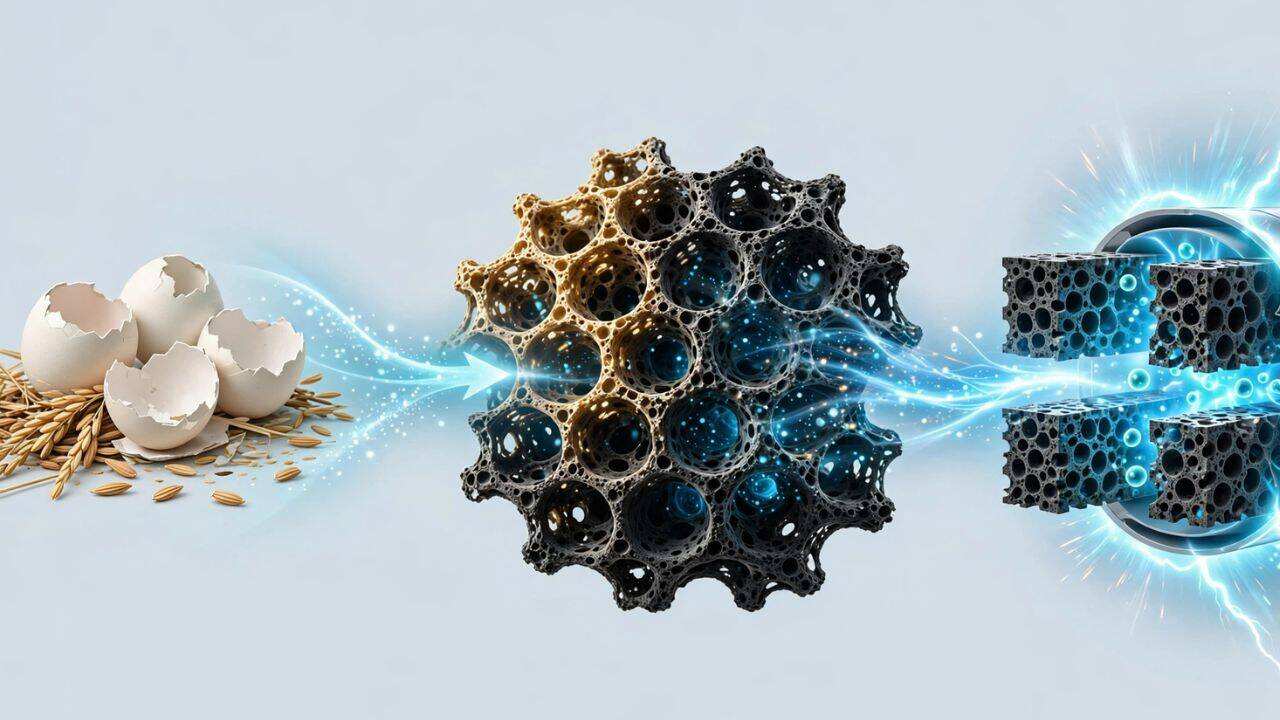

Supercapacitors represent a vital frontier in modern electronics, and researchers have recently uncovered a surprising method to advance this technology: utilizing egg and rice waste to build advanced energy storage components. As global demands for renewable power and efficient electronic storage grow exponentially, scientists are constantly seeking sustainable materials to replace expensive, environmentally taxing manufacturing components. By converting everyday kitchen discards into high-performance porous carbon, this innovative breakthrough bridges the gap between culinary sustainability and high-tech electrical engineering.
Table of Contents
The Science Behind Waste-Derived Supercapacitors
Traditional energy storage systems heavily rely on toxic heavy metals and rare earth elements, which present significant disposal and sourcing challenges. In contrast, organic waste materials provide a renewable, abundant, and naturally structured alternative. Researchers focused on common refuse—specifically eggshells and discarded rice—because of their intrinsic chemical compositions. Eggshells naturally feature calcium carbonate matrices combined with protein membranes, while rice offers rich organic carbon and silica scaffolds.
When these organic substances undergo carefully controlled thermal processing, their internal architectures transform dramatically. The resulting substance is not mere ash; rather, it forms a sophisticated, highly conductive porous carbon network. This matrix facilitates rapid ion movement, which is the foundational mechanism required for superior electrochemical performance.
Electrochemical Properties of Biomass Carbon
The efficiency of any electrical storage medium depends heavily on its surface area and conductivity. Biomass-derived carbon introduces exceptional characteristics:
- High specific surface area allowing for maximum ion adsorption.
- Inherent nitrogen and oxygen doping that enhances pseudo-capacitance.
- Stable three-dimensional structural integrity during continuous charge and discharge cycles.
How Egg and Rice Waste Become Electricity Storage
Transforming kitchen refuse into a functional power storage medium requires a precise multi-step scientific protocol. First, the raw biological materials are collected, thoroughly cleaned, and dried to remove unwanted moisture and biological contaminants. Following the preparation phase, the ingredients are mixed in precise ratios to balance the carbon-to-mineral content.
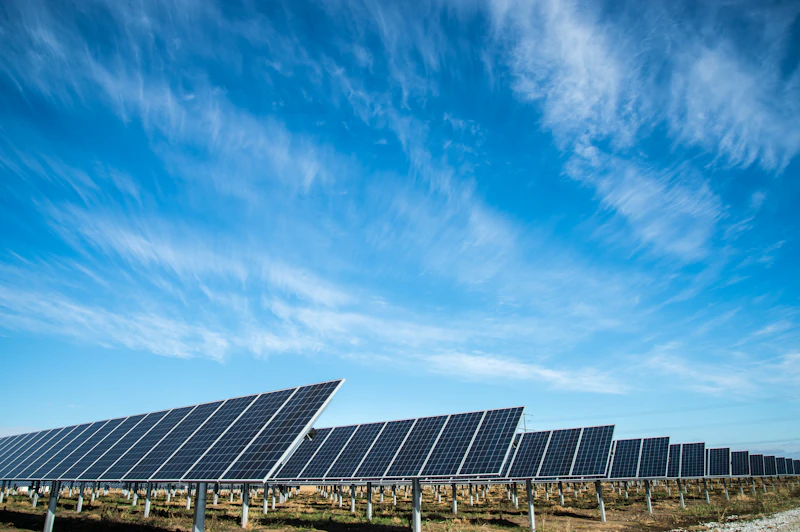
Laboratory testing of advanced carbon materials highlights their remarkable capacity for holding electrical charges.
Next, the mixture undergoes carbonization and activation processes inside specialized high-temperature furnaces under inert gas atmospheres. This thermal treatment burns away volatile organic compounds, leaving behind a rigid honeycomb framework. The resulting porous carbon is then integrated into prototype supercapacitor devices to evaluate its actual energy storage capabilities.
Advantages of Porous Carbon in Supercapacitors
Supercapacitors bridge the gap between traditional capacitors, which offer high power but low energy, and batteries, which provide high energy but slower charging rates. By utilizing a honeycomb structure derived from agricultural and food refuse, these new devices achieve remarkable electrochemical advantages.
Key Performance Metrics
| Material Property | Traditional Carbon | Waste-Derived Biomass Carbon |
|---|---|---|
| Surface Area | Moderate | Extremely High |
| Doping Elements | Rarely Present | Rich in Nitrogen and Oxygen |
| Sustainability | Low to Moderate | Exceptionally High |
Furthermore, the presence of nitrogen and oxygen heteroatoms within the carbon framework significantly boosts the capacitive behavior. These elements actively participate in redox reactions, effectively increasing the total electrical energy the device can retain without degrading structural stability.
Environmental and Economic Impacts
Managing food and agricultural surplus presents a massive logistical hurdle for municipalities worldwide. Landfills overflowing with organic refuse generate substantial quantities of methane, a potent greenhouse gas. Diverting eggshells and surplus grains toward advanced industrial applications creates a closed-loop circular economy.
From an economic perspective, utilizing waste materials drastically reduces the raw material costs associated with manufacturing high-end electronics. Instead of mining expensive precursors, manufacturers can potentially source abundant biomass directly from commercial food processors and agricultural sectors.
Conclusion
The successful conversion of organic discards into high-performance electrical storage components marks a monumental milestone for sustainable technology. By harnessing the natural honeycomb structure of egg and rice waste, scientists have proven that eco-friendly innovation can match or exceed the performance of traditional industrial methods. As this technology scales, it promises to revolutionize renewable energy grids, consumer electronics, and global waste management practices alike.