

Table of Contents
Introduction
An ancient Roman emperor bath dating back to approximately AD 310 has recently captured the fascination of archaeologists worldwide. Uncovered with an exceptionally rare and unusual layout, this elite private bathing complex showcases the advanced engineering, luxury, and architectural prowess of the Roman Empire during the fourth century. Featuring three distinct pools, sophisticated heating mechanisms, and a dedicated sauna area, the site offers unprecedented insights into imperial daily life and construction techniques.

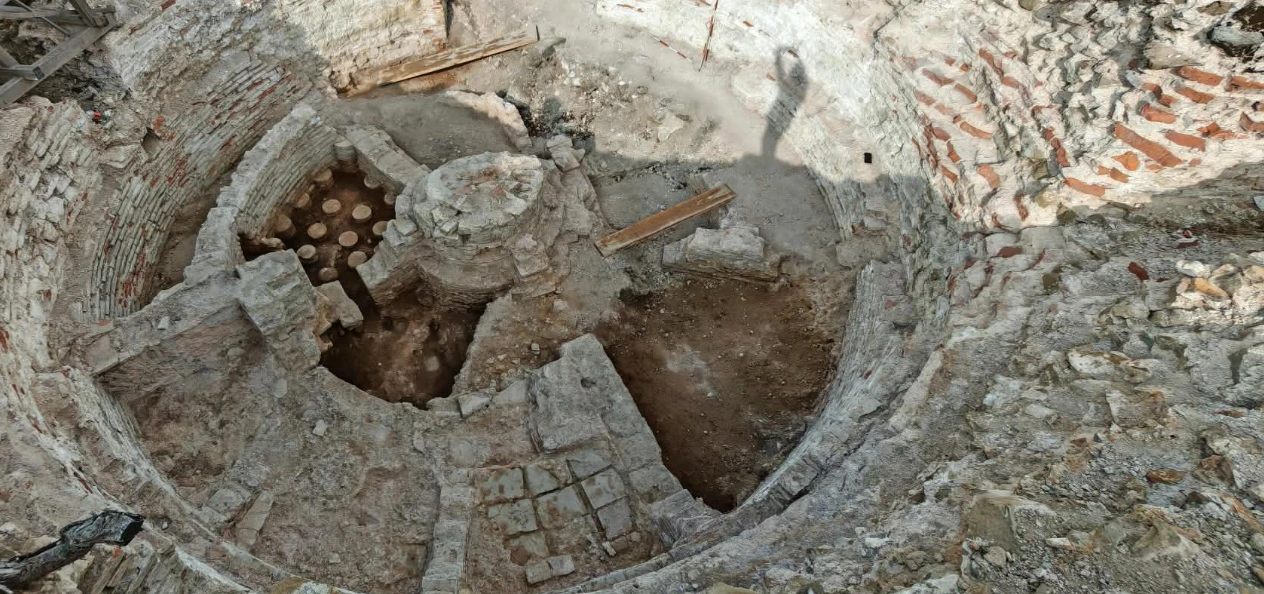
Excavated stone foundations of the newly discovered fourth-century Roman imperial bathhouse.
An Architectural Marvel of Ancient Roman Emperor Bath Design
The newly unearthed structure stands out due to its departure from standard symmetrical layouts typical of public Roman thermae. Instead, this private retreat was tailored specifically to the whims and high status of its royal patron. Archaeologists note that the integration of three distinct pools within a compact footprint demonstrates remarkable spatial planning.
Unusual Three-Pool Configuration
Most standard bathing facilities followed a linear progression from cold to warm to hot rooms, known respectively as the frigidarium, tepidarium, and caldarium. However, this specific ancient Roman emperor bath combined these experiences into a tightly integrated layout:
- Frigidarium: A cold water immersion pool designed to close pores after heat treatments.
- Tepidarium: A moderately warm transitional space for relaxation and oil scraping.
- Caldarium: A high-temperature hot water pool for intense sweating and cleansing.
Engineering Warmth: Heated Floors and Saunas
Beyond the pools, the sophistication of the complex lies in its thermal technology. The builders utilized the renowned hypocaust system, an underfloor heating method that allowed hot air from a central furnace to circulate beneath elevated marble floors and through hollow wall tiles. This ensured a steady, enveloping warmth throughout the bathing chambers.
The Early Roman Sauna Experience
Adding to its uniqueness, the complex included a specialized dry-heat chamber functioning much like a modern sauna. This demonstrates that imperial architects were experimenting with microclimates within private residences, blending Mediterranean bathing traditions with innovative heating concepts.

The hypocaust system allowed hot furnace air to circulate beneath floors and walls.
Historical Context and Significance
Constructed around AD 310, this architectural feat coincides with a period of intense political transformation and architectural revival within the Roman Empire under Emperor Constantine the Great and his contemporaries. Private imperial properties served not only as retreats for relaxation but also as venues for discreet political negotiations and the display of immense wealth.
Comparison with Public Thermae
| Feature | Public Thermae | Private Imperial Bath |
|---|---|---|
| Access | General public / Citizens | Emperor and select guests only |
| Design | Symmetrical, monumental | Compact, highly customized |
| Technology | Standard hypocaust | Advanced multi-zone heating and sauna |
Conclusion
The discovery of this exceptional ancient Roman emperor bath enriches our understanding of ancient engineering and imperial luxury. By combining three distinct pools, state-of-the-art hypocaust heating, and an early sauna design, this fourth-century marvel highlights the timeless human desire for comfort, wellness, and architectural grandeur.