

Table of Contents
- Introduction to the Exhibition
- Botticelli Madonna and Child Comes to Bengaluru
- Cultural Migration of the Mother and Child Motif
- The Curatorial Vision of Naman Ahuja and Andrea Anastasio
- Conclusion
Introduction to the Exhibition
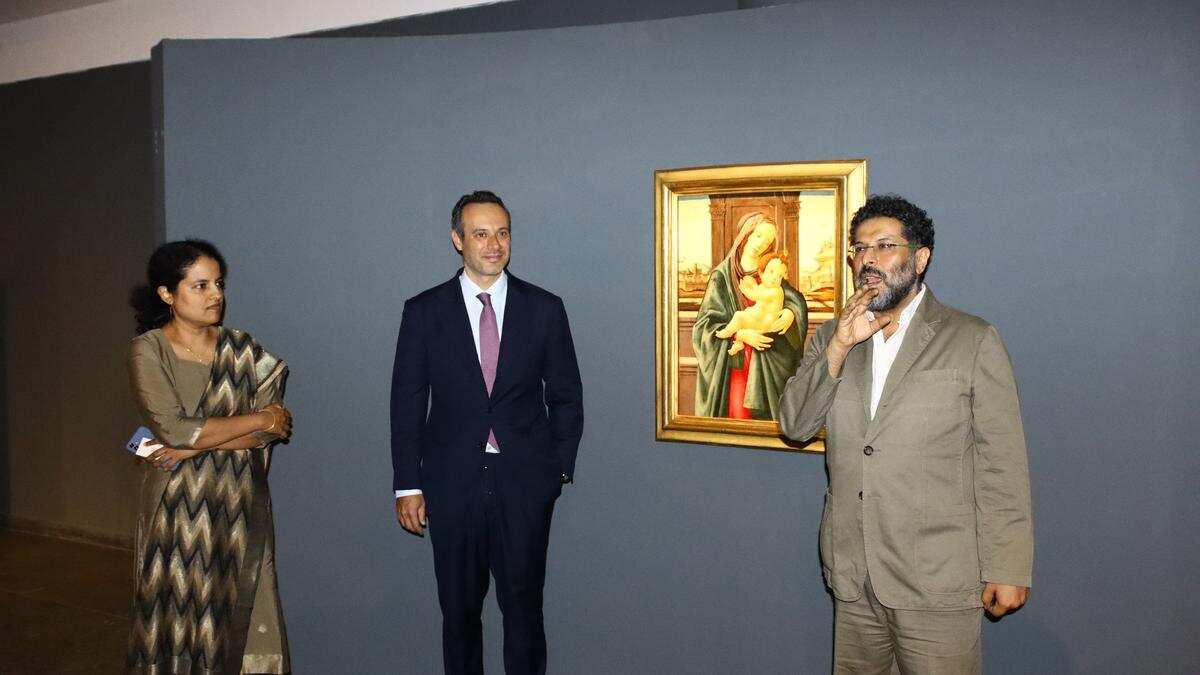
Art enthusiasts and cultural historians are witnessing a monumental moment as a rare Botticelli Madonna and Child comes to Bengaluru, marking a historic milestone for the city’s burgeoning arts scene. This breathtaking Renaissance masterpiece serves as the anchor for an ambitious new multidisciplinary exhibition designed to challenge traditional perspectives on iconography, global artistic exchange, and cultural migration.
Exhibitions of this caliber rarely travel to South Asia, making the current showcase a once-in-a-lifetime opportunity for local audiences to engage directly with European art history. Beyond the sheer aesthetic brilliance of the primary painting, the broader curatorial project offers deep insights into how visual motifs travel across centuries, adapting to new geographies, languages, and religious traditions.
Botticelli Madonna and Child Comes to Bengaluru
The arrival of Sandro Botticelli’s iconic imagery in Karnataka’s capital has generated immense excitement across the Indian subcontinent. Known for his ethereal grace, intricate line work, and profound emotional depth, Botticelli remains one of the defining figures of the early Italian Renaissance. Seeing his work up close allows viewers to appreciate the meticulous technique and revolutionary perspective that defined a transformative era in European art.
The painting is safely housed under rigorous conservation and security protocols to ensure its preservation while on public display. Local galleries and cultural institutions have collaborated extensively to create an environment that honors the historical weight of the artwork while welcoming diverse communities to experience it firsthand.
Cultural Migration of the Mother and Child Motif
Entitled One Mother, Many Mother Tongues, the exhibition goes far beyond a conventional display of European masterworks. Instead, it uses the universally recognized visual motif of the mother and child as a lens to explore global interconnectedness. As the artwork travels across borders, its identity shifts dynamically depending on regional, religious, linguistic, and cultural contexts.
- Universal Iconography: Examining how maternal figures are depicted across diverse global traditions.
- Linguistic Shifts: Exploring how local idioms and native tongues reinterpret classic visual narratives.
- Religious Synthesis: Understanding the overlapping spiritual meanings attributed to the mother-and-child archetype.
- Cross-Cultural Dialogue: Fostering conversations between Western Renaissance art and Eastern artistic traditions.
The Curatorial Vision of Naman Ahuja and Andrea Anastasio
The intellectual framework of the exhibition has been brilliantly crafted by co-curators Naman Ahuja and Andrea Anastasio. By bringing together disparate historical objects, contemporary artworks, and classical artifacts, they have created a rich, multi-layered narrative. Their collaborative approach highlights the porous nature of cultural boundaries, proving that artistic motifs have always been travelers rather than static symbols tied to a single geography.
Through thoughtful spatial design and insightful cataloging, the curators invite visitors to question preconceived notions of identity and heritage. Every room in the exhibition space tells a distinct story of adaptation, translation, and artistic evolution.
Conclusion
The landmark exhibition featuring the Renaissance masterpiece in Karnataka’s premier cultural hub stands as a triumph of international artistic collaboration. By examining how the mother and child theme adapts across different cultures, the showcase enriches our understanding of shared human history. Art lovers are strongly encouraged to visit this essential exhibition before it concludes its historic run.