

Table of Contents
Introduction to the New Driving Licence Points System
Driving licence points are set to become a reality in India under a comprehensive overhaul proposed by Union Minister Nitin Gadkari. As road safety remains a critical national challenge, the government is looking beyond traditional financial fines to curb reckless driving habits. The upcoming framework aims to introduce a graded penalty system that tracks individual traffic violations over time, fundamentally shifting how accountability is managed on national highways and city streets.

The proposed regulatory framework targets persistent traffic violations through a structured penalty system.
Understanding this upcoming legislative shift is essential for every motorist. Rather than merely paying a challan and continuing unsafe practices, drivers will face cumulative consequences that directly threaten their driving privileges. This guide explores the mechanics of the proposed system, the inclusion of reward mechanisms for law-abiding citizens, and the broader implications for Indian transport policy.
How the Driving Licence Points Framework Operates
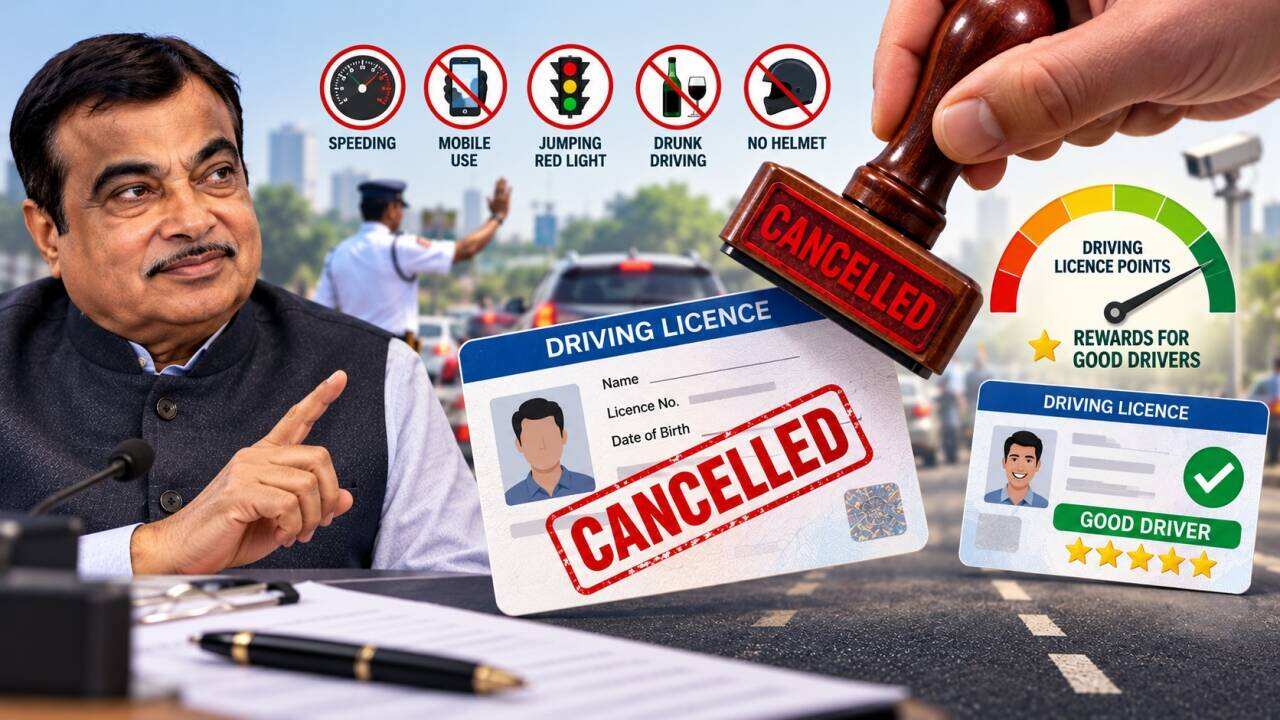
The core mechanism of the proposed policy revolves around a ledger of demerits assigned to specific infractions. Under the driving licence points model, every registered motorist starts with a clean slate. When a traffic violation occurs—such as speeding, jumping a red light, or using a mobile phone while driving—authorities will deduct points or add demerit marks depending on the final statutory design.
Graded Penalties for Infractions
Different offences carry varying levels of severity. Minor infractions might result in a small point deduction, whereas major safety violations like reckless driving or driving under the influence will trigger severe penalties. Once a driver accumulates a predetermined threshold of demerits, administrative action kicks in automatically.
- Minor infractions: Low point deductions and warnings.
- Moderate offences: Substantial point loss and mandatory safety courses.
- Severe violations: Immediate licence suspension or permanent cancellation.
Rewarding Safe Driving Habits
Interestingly, the proposed framework is not entirely punitive. Alongside tracking driving licence points for violations, the Ministry of Road Transport and Highways is exploring incentive structures for exemplary behavior. Motorists who maintain a clean record over extended periods could receive tangible benefits.

Law-abiding motorists may soon receive financial or administrative rewards for maintaining safe driving habits.
Potential rewards might include discounts on vehicle insurance premiums, fast-track processing for licence renewals, or official recognition. This balanced approach ensures that safe drivers feel valued while habitual rule-breakers face the full weight of the law.
Strict Penalties for Repeat Offenders
The primary target of the new rules is the persistent violator. Traditional fine systems often failed because wealthy offenders treated monetary penalties as a minor cost of convenience. By tying infractions directly to the validity of the permit, the driving licence points system ensures that reckless behavior has lasting consequences.
Suspension and Cancellation Protocols
When an individual crosses the critical threshold of accumulated demerits, transport authorities will initiate suspension proceedings. For chronic offenders, the licence could be revoked entirely, barring them from legally operating a motor vehicle for a specified duration or indefinitely.
| Violation Level | Action Taken | Consequence |
|---|---|---|
| First Offence | Warning / Minor Penalty | Points recorded |
| Moderate Accumulation | Mandatory Retraining | Temporary restriction |
| Severe Threshold Reached | Licence Suspension | Driving prohibited |
| Habitual Offender | Permanent Cancellation | Licence revoked |
Global Benchmarks and Indian Road Safety
Many developed nations, including the United Kingdom, Australia, and various European countries, have successfully implemented demerit point systems for decades. Adopting a similar framework in India aligns local transport standards with international best practices. As vehicle density grows, modernizing traffic enforcement becomes paramount to reducing annual fatalities.
Conclusion
The introduction of a driving licence points system marks a transformative milestone in India’s approach to road safety. By balancing strict punitive measures for repeat offenders with rewarding incentives for responsible motorists, the government aims to foster a culture of compliance and mutual respect on the roads. Motorists must stay informed and adapt their driving habits to navigate these upcoming regulatory changes successfully.