

Table of Contents
- Introduction
- The Moss Filter Innovation
- How the Technology Works
- Environmental and Health Impact
- Conclusion
Introduction
Moss filter technology has received an astonishing breakthrough thanks to an extraordinary young mind. Nithya Tammana, an 11-year-old student from New Jersey, has engineered a groundbreaking, cost-effective water purification device. Her invention addresses one of the most persistent and dangerous public health hazards of our time: heavy metal contamination in municipal and residential water supplies. While utility companies often rely on expensive chemical treatments and industrial-scale infrastructure to purify water, this young innovator looked to nature for inspiration.
The Moss Filter Innovation
Access to clean drinking water remains a critical global challenge, particularly in aging urban areas where legacy infrastructure leaches heavy metals into the supply. Traditional filtration systems often require significant financial investments, making them inaccessible to lower-income households and vulnerable communities. Recognizing this disparity, Nithya set out to design a solution that is both highly effective and remarkably affordable.
Overcoming Affordability Barriers
The resulting prototype costs less than 38 dollars to construct. By utilizing readily available, eco-friendly biological materials, the device bypasses the high costs associated with proprietary commercial filters. This democratization of water safety technology ensures that vulnerable populations can protect themselves against toxic exposure without breaking the bank.
How the Technology Works
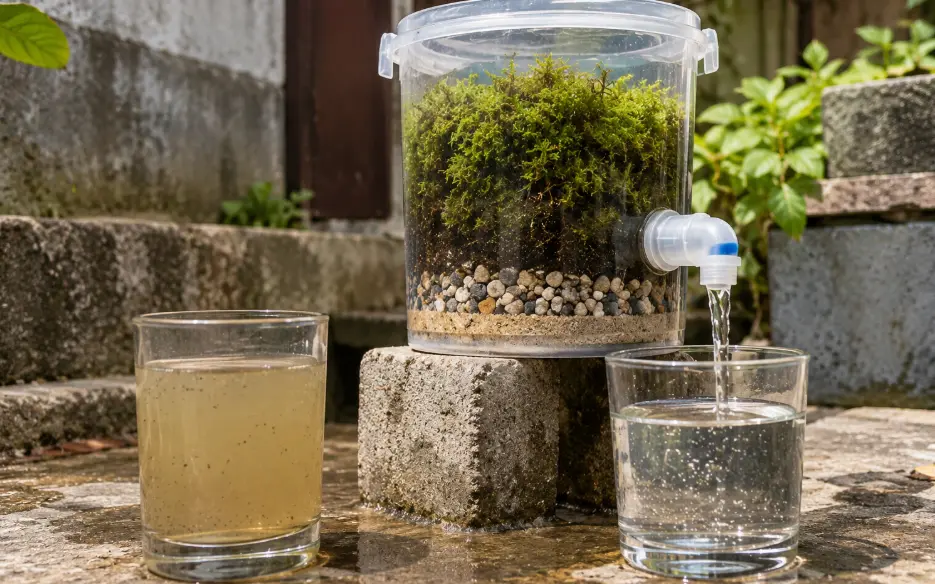
At the heart of the invention is the unique biological property of bryophytes—commonly known as moss. Through meticulous experimentation and testing, the young scientist discovered that specific moss varieties possess an exceptional natural affinity for heavy metal ions. When contaminated water flows through the medium, the cellular structure of the moss binds to dissolved pollutants.
- Natural biosorption of toxic heavy metal particles
- Cost-effective assembly utilizing everyday hardware components
- Scalable design suitable for household tap integration
- Zero electricity requirement for baseline filtration
Remarkably, rigorous laboratory testing demonstrated that the low-cost apparatus successfully removes up to 95 percent of lead from contaminated samples. This impressive removal rate rivals many commercial systems sold at a fraction of the environmental footprint.
Environmental and Health Impact
Lead poisoning is a severe medical condition that can cause irreversible developmental delays in children and chronic neurological damage in adults. The crisis in places like Flint, Michigan, highlighted how fragile municipal water systems can be. By introducing a decentralized, grassroots solution, this breakthrough offers a vital line of defense.
Furthermore, because the primary filtering medium is organic, the disposal and lifecycle of the unit present significantly fewer environmental hazards compared to synthetic plastic filter cartridges. Biodegradability aligns the device with modern sustainability goals.
Conclusion
The remarkable achievement of an 11-year-old inventor proves that innovative problem-solving knows no age limits. By transforming simple biological organisms into a high-performing purification system, this project bridges the gap between environmental science and practical accessibility. As further testing and development continue, this inspiring creation holds immense promise for safeguarding public health worldwide.