
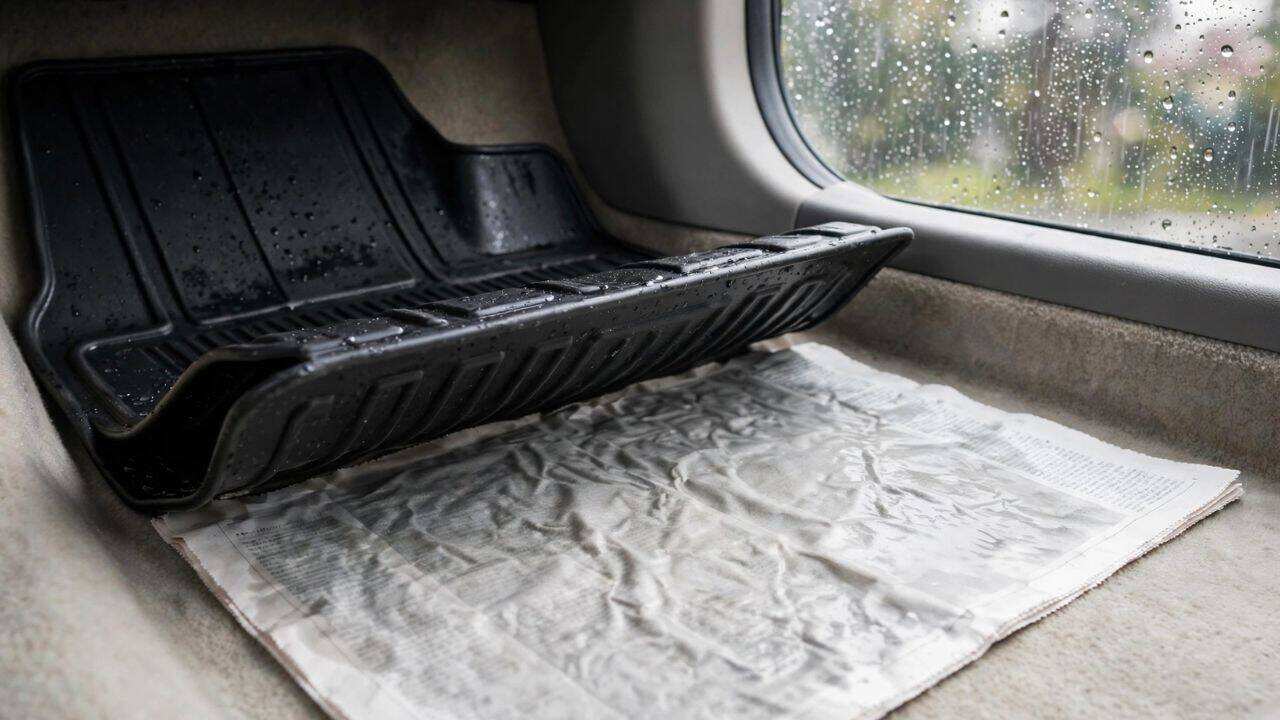

When autumn storms and winter downpours arrive, managing moisture inside your vehicle becomes a constant battle. Tracking in rain, snow, and slush quickly turns your vehicle’s footwells into damp breeding grounds for unpleasant odors and mold. Fortunately, an old-school automotive hack involves placing newspaper under car mats to protect your vehicle interior. This budget-friendly, highly effective method utilizes the absorbent properties of newsprint to manage moisture, trap mud, and preserve your car carpets throughout the wet season.
Understanding the Newspaper Car Mat Hack
For generations, resourceful drivers have relied on daily print media to solve everyday automotive challenges. Beyond reading the headlines, old newspaper sheets serve a brilliant secondary purpose in vehicle maintenance. When placed strategically beneath standard rubber or carpet floor mats, paper acts as a primary line of defense against the elements. This clever trick prevents water from soaking directly into the woven floorboards, saving vehicle owners from expensive professional detailing or irreversible water damage.
Why Traditional Methods Fall Short
Standard rubber floor mats are designed to hold standing water, but they often overflow or allow condensation to seep underneath through microscopic gaps and anchoring holes. Once moisture slips past the mat barrier, it becomes trapped against the vehicle floorboard. This hidden dampness goes unnoticed for weeks, slowly degrading the integrity of the underlying carpet and padding.
The Advantage of Newsprint
Unlike synthetic materials that merely pool liquid, newsprint actively wicks moisture away from vulnerable surfaces. The porous nature of the paper fibers allows them to draw in ambient humidity and liquid runoff efficiently. By sandwiching newspaper sheets between the vehicle floor and the top mat, you create an active desiccant system that neutralizes moisture before it can cause structural harm.
How Newspaper Absorbs Moisture
The science behind using newspaper for moisture control lies in cellulose paper fibers and capillary action. When wet shoes deposit water onto the floor area, the top mat catches the initial volume. However, any liquid that migrates downward immediately encounters the layered paper sheets.
- Capillary Action: Liquid travels rapidly through the microscopic spaces between compressed paper fibers.
- High Surface Area: Multiple folded sheets provide an expansive surface area for evaporation.
- Air Circulation: Loosely packed paper allows air pockets to assist in drying out trapped humidity.

Protecting Vehicle Carpets from Mildew and Odors
One of the most persistent issues during rainy seasons is the emergence of musty, damp smells inside the cabin. These odors originate from bacterial and fungal growth thriving in dark, moist environments beneath floor mats. Mold spores multiply rapidly when vehicle carpets remain damp for extended periods.
By absorbing standing water swiftly, newspaper significantly reduces the relative humidity inside the footwell. Without sufficient moisture, mold and mildew cannot establish colonies. Consequently, your car stays fresh, smelling clean rather than damp and stagnant throughout the entire winter season.
Trapping Mud, Dirt, and Debris
Rain rarely falls in isolation; it usually brings heavy mud, gritty sand, and slush along for the ride. As passengers enter the vehicle, footwear deposits these contaminants onto the floor mats. While mats catch most of the mess, fine particulate matter often sifts through to the underlying carpet.
Newspaper adds an extra filtration layer. Any dirt that bypasses the primary mat settles onto the paper. When it is time to clean the vehicle, simply lifting out the soiled paper removes accumulated grit and grime instantly, sparing your vacuum cleaner significant effort.
Best Practices for Maintaining Your Car Floors
To maximize the benefits of this automotive tip, proper execution and maintenance are essential. Neglecting damp paper can lead to the very problems you are trying to avoid.
Regular Replacement Schedule
Newspaper is not a permanent fixture. Once the paper becomes completely saturated, it loses its absorbent capacity and can actually retain moisture against the floor. Inspect your footwells weekly and replace damp sheets with fresh, dry ones.
Monitoring for Hidden Leaks
Consistently soaked newspaper can also serve as an early warning system. If the paper under your mats remains perpetually drenched even during dry weather, it may indicate a deeper issue, such as a leaking windshield seal, worn door gaskets, or clogged sunroof drains.
Conclusion
Utilizing newspaper under your car mats during the rainy season is a simple, cost-effective strategy for protecting your vehicle interior. By absorbing excess moisture, preventing mold growth, and trapping stray debris, this classic hack preserves the condition of your car carpets. Implement this routine maintenance step today to keep your cabin dry, fresh, and clean all year round.