
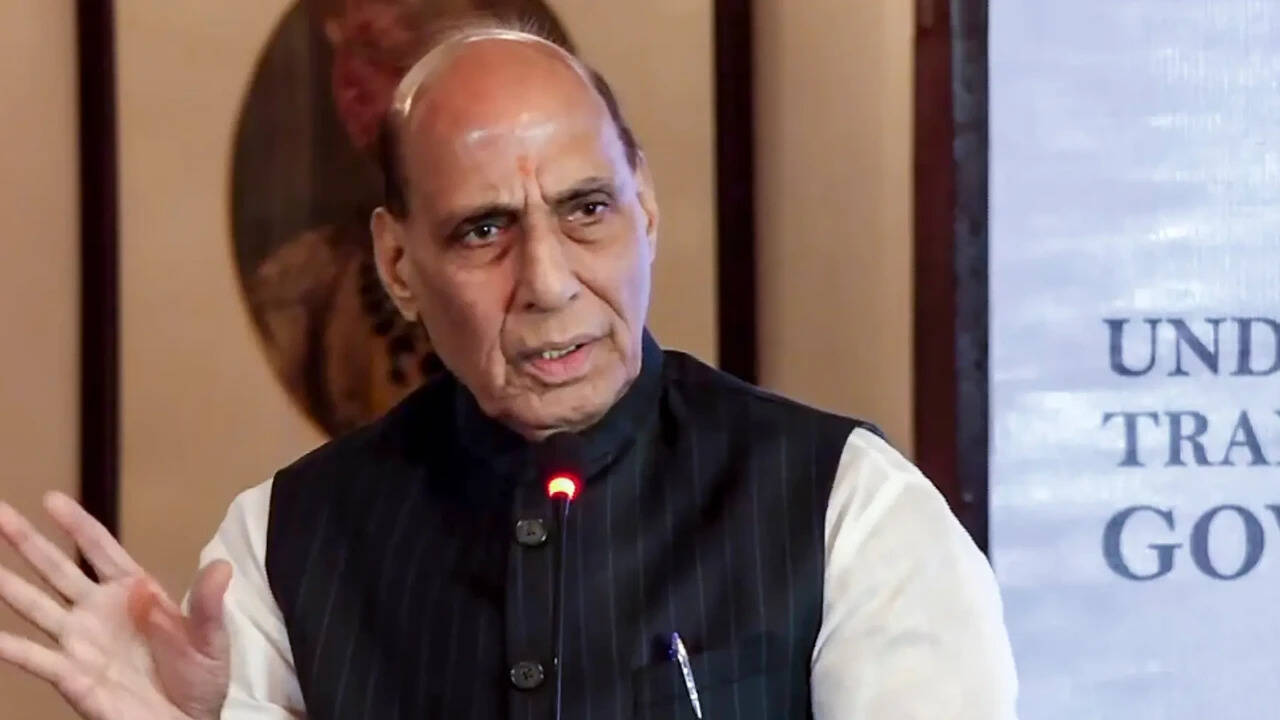

When examining modern Indian politics, few strategies are as fiercely debated as the clash of narratives between the ruling administration and the political opposition. Rajnath Singh recently stated that Prime Minister Narendra Modi successfully blunted the opposition’s false narrative through development and effective governance. This comprehensive analysis explores how strategic policy implementation, targeted welfare delivery, and administrative reforms reshaped the national political discourse over recent years.
Table of Contents
Understanding the Narrative War in Indian Politics
In contemporary democracies, shaping public perception is often just as critical as winning elections. Political parties constantly battle to define reality for millions of voters. Over the last decade, the political landscape has witnessed numerous fierce ideological battles. Opposition parties frequently utilize critical discourse regarding economic challenges, institutional independence, and social cohesion to challenge the ruling coalition.
However, senior leadership within the government argues that rhetoric alone cannot overshadow tangible administrative achievements. By focusing heavily on grassroots delivery and infrastructural progress, the central administration sought to establish a counter-narrative rooted in execution rather than mere promises. This strategic shift redefined how political accountability is measured in India.
Governance as a Shield Against Political Opposition
Defense Minister Rajnath Singh emphasized that administrative performance serves as the ultimate answer to critics. Instead of engaging in perpetual verbal sparring, the government channeled its energy into structural transformation and institutional efficiency. When political opponents raised concerns about democratic backsliding or economic stagnation, the administration responded with data-backed policy rollouts and large-scale public infrastructure projects.
Key Pillars of Administrative Counter-Strategy
- Direct benefit transfers to eliminate intermediaries and corruption.
- Accelerated highway and railway construction connecting remote regions.
- Digital public infrastructure initiatives driving financial inclusion.
- Transparent governance frameworks reducing bureaucratic red tape.
By shifting focus toward systemic improvements, the administration systematically dismantled arguments suggesting policy paralysis. Voters increasingly evaluated the leadership based on visible changes in their daily lives rather than partisan rhetoric.
Welfare Schemes and Their Ground Impact
A crucial element in blunting adversarial narratives was the massive expansion of targeted welfare programs. Traditional welfare distribution in India often suffered from leakages, inefficiencies, and corruption. The implementation of modern digital verification tools significantly transformed this landscape.
Millions of citizens gained access to subsidized cooking gas, affordable housing, sanitation facilities, and free healthcare services. These initiatives directly touched the lives of marginalized communities, creating a loyal voter base that transcended traditional caste and regional boundaries.
| Welfare Initiative | Primary Objective | Estimated Reach |
|---|---|---|
| PM Ujjwala Yojana | Clean cooking fuel for rural households | Over 95 million beneficiaries |
| PM Awas Yojana | Affordable housing for urban and rural poor | Millions of completed houses |
| Ayushman Bharat | Comprehensive health insurance coverage | Hundreds of millions eligible |
When political opponents claimed that development was bypassing the common citizen, the empirical data from these welfare schemes provided a starkly different reality, effectively neutralizing criticism.
Economic Reforms and Policy Stability
Economic policy remains a primary battleground for political debate. Critics often highlight issues concerning unemployment, inflation, and income inequality. In response, policymakers championed structural economic reforms designed to foster long-term resilience.
Major Economic Milestones
- Implementation of the Goods and Services Tax (GST) to unify the national market.
- Introduction of the Insolvency and Bankruptcy Code (IBC) to clean up banking balance sheets.
- Launch of Production-Linked Incentive (PLI) schemes to boost domestic manufacturing.
- Aggressive promotion of digital transactions, making India a global fintech leader.
These decisive measures stabilized the macroeconomic environment and reassured global investors. Consequently, narrative attacks focusing on economic incompetence lost significant traction among the business community and urban voters alike.
National Security and Strategic Decisions
Beyond domestic policy and welfare, national security played a pivotal role in shaping public perception. Decisions surrounding border security, defense modernization, and foreign policy assertiveness significantly strengthened the government’s standing.
By projecting a strong and uncompromising stance on national security matters, the administration successfully aligned itself with patriotic sentiments. This effectively countered any opposition attempts to portray the leadership as weak or diplomatically isolated on the global stage.
Conclusion
In summary, the political assessment offered by Rajnath Singh highlights a pragmatic approach to modern governance. By prioritizing transparent welfare delivery, robust economic reforms, and decisive national security measures, the leadership successfully neutralized adversarial criticisms. Ultimately, visible development and administrative execution proved far more potent than opposition rhetoric, permanently altering the dynamics of electoral politics in India.