

Table of Contents
Introduction
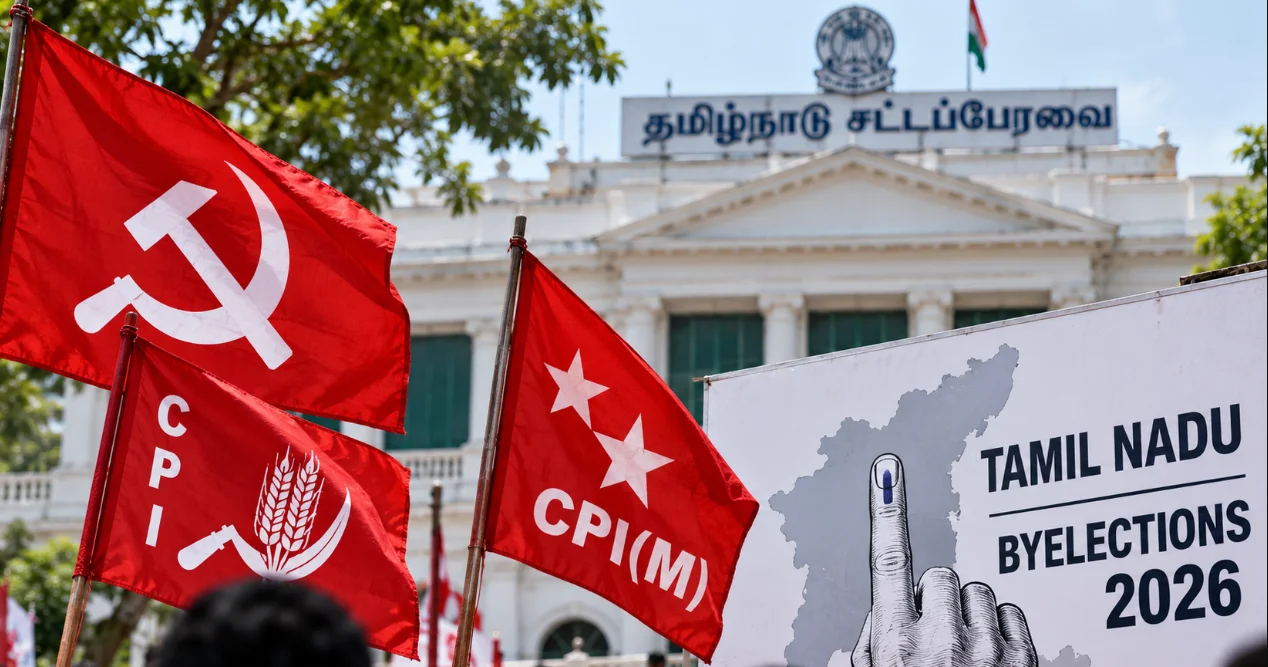
As Tamil Nadu prepares for upcoming political battles, Tamilnadu bypolls have once again taken center stage. The recent decision by Left parties to distance themselves from actor-turned-politician Vijay’s Tamizhaga Vetri Kazhagam (TVK) and contest independently marks a significant development in the state’s electoral dynamics. This strategic move highlights the complex web of alliances, ideological positioning, and political maneuvering characteristic of the region.
The Evolving Political Landscape
Tamil Nadu politics has historically been dominated by major Dravidian parties, with national and smaller regional parties playing crucial secondary roles. However, the entry of new political formations like TVK has disrupted traditional equations. Smaller factions and ideological groups must carefully evaluate whether to align with untested newcomers or rely on their independent grassroots networks during the TN bypolls.
- Traditional Dravidian alliances remain deeply entrenched.
- New entities like TVK are testing their electoral appeal.
- Left parties maintain a strong historical presence in specific pockets.
Why Left Parties Chose to Go Solo
The Communist Party of India (CPI) and the Communist Party of India (Marxist) [CPI(M)] have long advocated for clear ideological alignment. By choosing to give TVK the cold shoulder and contest the TN bypolls on their own, the Left parties emphasize their commitment to independent policy platforms rather than opportunistic alliances.
Maintaining Ideological Clarity
For the Left, maintaining a distinct identity is paramount. Partnering with a newly formed party without a proven governance record or a clearly defined long-term economic platform poses substantial political risks. Consequently, contesting solo allows them to mobilize their dedicated cadre effectively.
Impact on the TN Bypolls
The decision of Left parties to run independently will undoubtedly reshape vote shares in constituencies holding upcoming elections. While major coalitions command extensive resources, the localized influence of the Left can alter multi-cornered contests significantly. Voters in the TN bypolls now face a broader array of choices, testing the strength of both traditional and alternative political forces.
Conclusion
The refusal of Left parties to join forces with TVK for the TN bypolls underscores the fluid and highly competitive nature of regional politics. As campaigns unfold, the ability of these independent factions to resonate with the electorate will serve as a crucial indicator of future alliance patterns in Tamil Nadu. Understanding these dynamics is essential for grasping the broader political trajectory of the state.