

Table of Contents
- Introduction
- The Playground Discovery
- Scientific Significance of the Sea Star Fossil
- Preservation and Future Display
- Conclusion
Introduction
Sea star fossil discoveries often happen in remote academic expeditions or rugged mountainous terrains. However, paleontology enthusiasts can sometimes find remarkable prehistoric artifacts in the most unexpected urban locations. A seven-year-old girl recently captured international headlines by uncovering a magnificent piece of ancient history during an ordinary afternoon of play. This extraordinary find bridges the gap between everyday urban environments and the deep, mysterious epochs of Earth’s ancient past.
The Playground Discovery
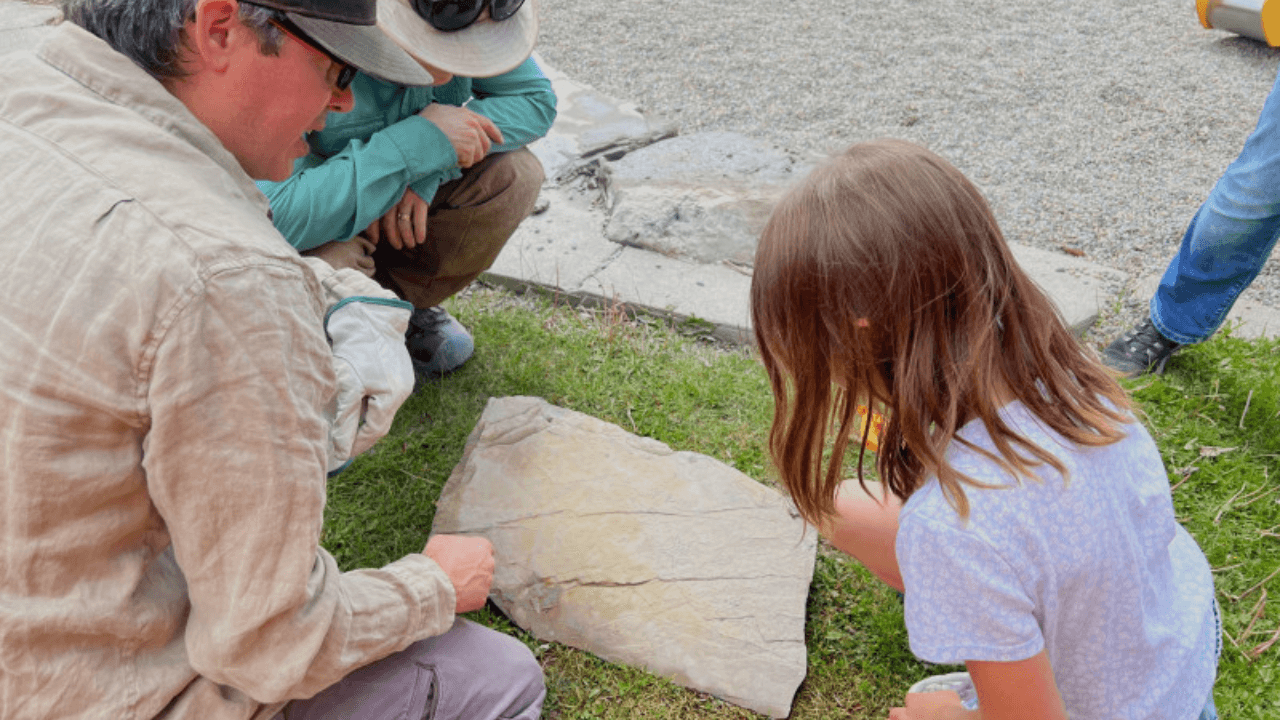
While playing at a local park in Calgary, young Alyssa noticed something unusual embedded inside a large boulder. Instead of standard playground equipment, her keen eye focused on a distinctive pattern resembling an ancient marine creature. Parks and construction sites frequently utilize heavy landscape stones quarried from regional geological formations. Over the years, countless children likely climbed over this specific rock without realizing it housed a fragile snapshot of prehistoric marine life.
- Location: Calgary playground
- Discoverer: 7-year-old Alyssa
- Artifact: Ancient marine invertebrate
- Setting: Landscape boulder placed during park construction
Scientific Significance of the Sea Star Fossil
Paleontology experts quickly examined the specimen and confirmed its authenticity and extreme rarity. The specimen dates back an astounding 445 million years, positioning it firmly within the Ordovician period. Soft-bodied marine creatures like sea stars rarely survive the fossilization process because they decompose rapidly before mineral replacement can occur. Specific geological conditions must align perfectly to preserve such delicate biological structures in stone.
Why Ordovician Fossils Matter
The Ordovician period was a time of intense biological diversification in Earth’s ancient oceans. Discovering well-preserved echinoderms from this era helps scientists reconstruct ancient marine ecosystems and understand how prehistoric species adapted to shifting environmental pressures. Researchers often study paleontology discoveries to map out long-term evolutionary trends.
Preservation and Future Display
Following the confirmation of its scientific value, specialists carefully extracted the specimen from the landscape boulder. Protecting such a fragile artifact requires specialized tools and meticulous laboratory techniques to prevent fracturing the surrounding matrix. Museum curators are currently evaluating the fossil for potential public exhibition, ensuring that future generations can admire the remarkable discovery made by a curious child.
Conclusion
The remarkable discovery made by young Alyssa demonstrates that curiosity and keen observation can unearth history anywhere. This ancient marine treasure not only enriches our understanding of prehistoric ecosystems but also inspires a new generation of young scientists to explore the natural world around them.