

Table of Contents
An extraordinary security proposal featuring a crocodile moat has thrust a complex environmental and legal debate into the spotlight. The initiative involves surrounding maximum-security prison wings with water trenches filled with Nile crocodiles, creating an unprecedented intersection of wildlife management and penal oversight.
This unusual concept was originally put forward in December 2025 by Israeli National Security Minister Itamar Ben-Gvir, who reportedly drew inspiration from US President Donald Trump’s colloquial nickname, “Alligator Alcatraz,” used for an immigrant detention facility in Florida.
What began as a striking security proposal has quickly evolved into a multifaceted discussion concerning wildlife protection, regulatory frameworks, and broader land governance across the country, as detailed by global news reports on Middle Eastern environmental policies.
The practical implementation of this vision required significant legal and administrative adjustments regarding captive animals. Historically, Nile crocodiles ranged widely across parts of Africa and the Middle East. However, widespread hunting, habitat loss, and dam construction ultimately led to their complete disappearance from the region’s wild landscape.
The last confirmed sighting of a wild Nile crocodile in what is now Israel occurred back in 1905. Since that time, the species has survived locally solely in captivity, maintained within dedicated conservation centers and commercial crocodile farms.
The proposal has since become part of a broader debate over the status of crocodiles in Israel, their management in captivity and the role of environmental regulations in decisions involving land and wildlife. Nile crocodiles once had a much wider range, extending across parts of Africa and into the Middle East. Hunting, habitat loss and dam construction contributed to their disappearance from large portions of that range.
Regulatory Shifts and Captive Wildlife Classification
For many years, commercial use of these reptiles remained strictly prohibited following a 2012 ban. That landscape shifted dramatically on July 15, 2026, when Israel’s Environmental Protection Minister, Idit Silman, officially removed the protected status of the captive reptiles.
Instead, she placed them into a novel category designated as “cultivated wild animal.” This critical administrative change permits multiple government bodies to share management authority, moving away from the exclusive jurisdiction of the Israel Nature and Parks Authority (INPA), which traditionally oversees all protected species.
Following this reclassification, responsibility for certain captive crocodiles could be transferred to the Israel Prison Service (IPS). According to statements from Ben-Gvir’s office, the IPS welcomed the adjustment, asserting it would alleviate the heavy guarding burdens placed on prison officers stationed at facilities holding high-risk detainees.
Shortly after the announcement, Ben-Gvir shared an artificial intelligence-generated image depicting himself next to a crocodile accompanied by a warning message directed at potential escapees. Despite official enthusiasm, the overarching initiative faced immediate pushback from environmental professionals.
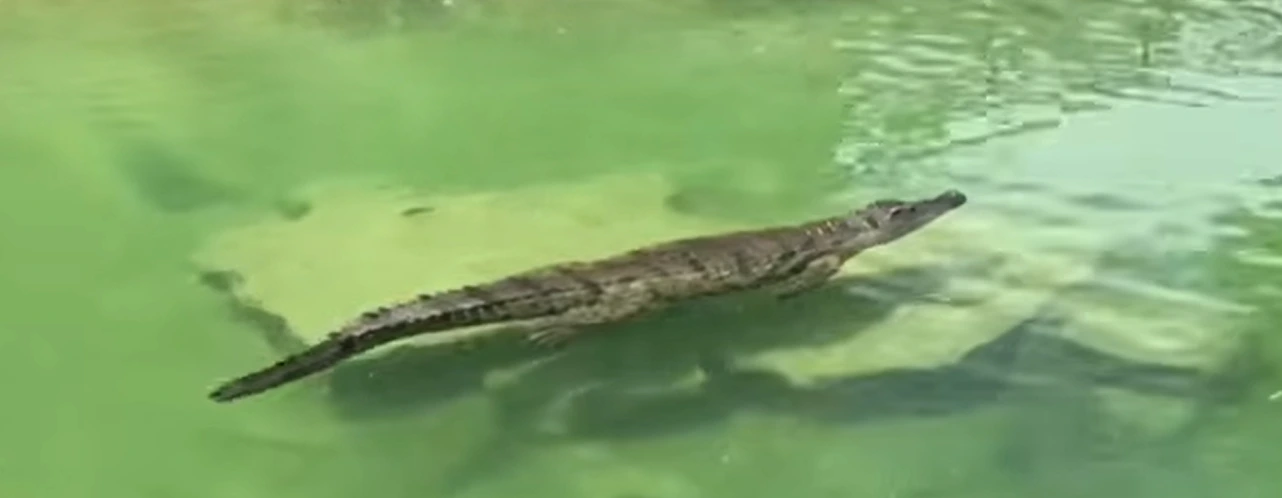
Some of these captive crocodiles could now be controlled by the Israel Prison Service (IPS), streamlining a proposal for a crocodile moat to encircle maximum-security wings in Israeli prisons.
“The Israel Prison Service welcomes the move, which will ease the burden on prison officers guarding Nukhba (Hamas) terrorists,” said Ben-Gvir’s office, which oversees the IPS, in a statement. Post Silman’s announcement, Ben-Gvir posted an AI-generated image of him kneeling beside a crocodile with a caption: “Are you thinking of attempting to escape? Think again.”
Legal Challenges and Animal Welfare Concerns
Construction efforts reportedly commenced at Ketziot Prison, situated in the Negev desert and primarily housing Palestinian prisoners. The National Security Ministry allocated a budget of NIS 21 million, equivalent to roughly $7 million, to fund the construction of these trenches. However, animal welfare advocacy groups swiftly intervened.
The Israeli organization Let the Animals Live filed a legal petition arguing against the project on ethical and welfare grounds, leading the Jerusalem District Court to issue a temporary injunction halting the construction work on August 2, 2026.
Three days after the court order, high-ranking officials visited the active construction zones to inspect the ongoing work. Defending the controversial strategy, officials maintained that individuals detained for severe offenses should face unique environmental deterrents.
Conversely, the INPA issued an official statement to the press emphasizing that there exists no professional or scientific basis anywhere around the globe for introducing predators into detention facilities as a standard security measure. The legal dispute remains under active judicial review as courts weigh animal protection laws against state security ambitions.
Reportedly, trenches are already being dug at Ketziot Prison in the Negev desert, which primarily houses Palestinian prisoners.
The National Security Ministry has reportedly allocated NIS 21 million ($7 million) for the trenches, yet the Jerusalem District Court issued a temporary injunction against the plan on 2 August citing animal welfare concerns, in response to a petition by the Israeli Let the Animals Live advocacy group. The court is now reviewing the case.
Broader Environmental and Land Management Context
Beyond the immediate controversy surrounding the crocodile moat project, environmental discussions in the region frequently intersect with larger questions of land use and territorial administration. Over many decades, extensive afforestation and land-management projects have transformed open spaces. Organizations such as the Jewish National Fund, known as KKL-JNF, have played a central role in planting hundreds of millions of trees, preventing soil erosion, and rehabilitating natural ecosystems across state-owned properties.
At the same time, conservation policies have occasionally triggered friction regarding community access and land utilization. Various researchers and local communities have pointed out that designating areas as nature reserves or national parks can introduce strict regulatory limitations on traditional agricultural practices, livestock grazing, and local construction.
While conservation authorities maintain that park designations do not alter underlying property ownership rights, these intersecting policies ensure that environmental management remains deeply intertwined with broader societal discussions and regional development.
Israel has developed an extensive network of forests, national parks and nature reserves over decades. The Jewish National Fund, known as KKL-JNF, has played a major role in afforestation and land-management projects. The organisation says its environmental work includes preventing soil erosion, promoting biodiversity, rehabilitating open spaces and supporting sustainable development.
Environmental protection and land management are particularly sensitive issues in areas where questions of ownership, access and territorial control are contested.
- Wild Nile crocodiles vanished from the local landscape by 1905 due to hunting and habitat loss.
- A 2026 ministerial decision reclassified captive crocodiles as cultivated wild animals.
- A temporary court injunction paused the Ketziot Prison trench construction following animal welfare petitions.
- The proposed security structure is officially designed to encircle maximum-security wings.
- Conservation groups question the scientific basis of utilizing predators for institutional security.
- The Israel Prison Service welcomed the reclassification to reduce guard burdens on staff.
- The proposed crocodile moat continues to face rigorous legal scrutiny in court.
Frequently Asked Questions
What inspired the prison crocodile moat proposal?
The security concept was inspired by US President Donald Trump’s “Alligator Alcatraz” Florida detention facility nickname, proposed initially by Israeli National Security Minister Itamar Ben-Gvir.
When did Nile crocodiles disappear from the wild in the region?
The last confirmed sighting of a wild Nile crocodile within the area dates back to 1905, after which the species survived solely in captivity.
Why was the construction at Ketziot Prison temporarily halted?
The Jerusalem District Court issued a temporary injunction in August 2026 following an animal welfare petition filed by the advocacy group Let the Animals Live.
Conclusion
The debate over introducing a functional crocodile moat into a modern correctional facility highlights the complex intersection of security policy, animal welfare, and historical conservation. As the legal system reviews the ongoing petitions regarding the Negev desert site, the broader conversation regarding wildlife classifications and public land management continues to evolve across the nation, ensuring that the crocodile moat concept remains a focal point of intense discussion.