
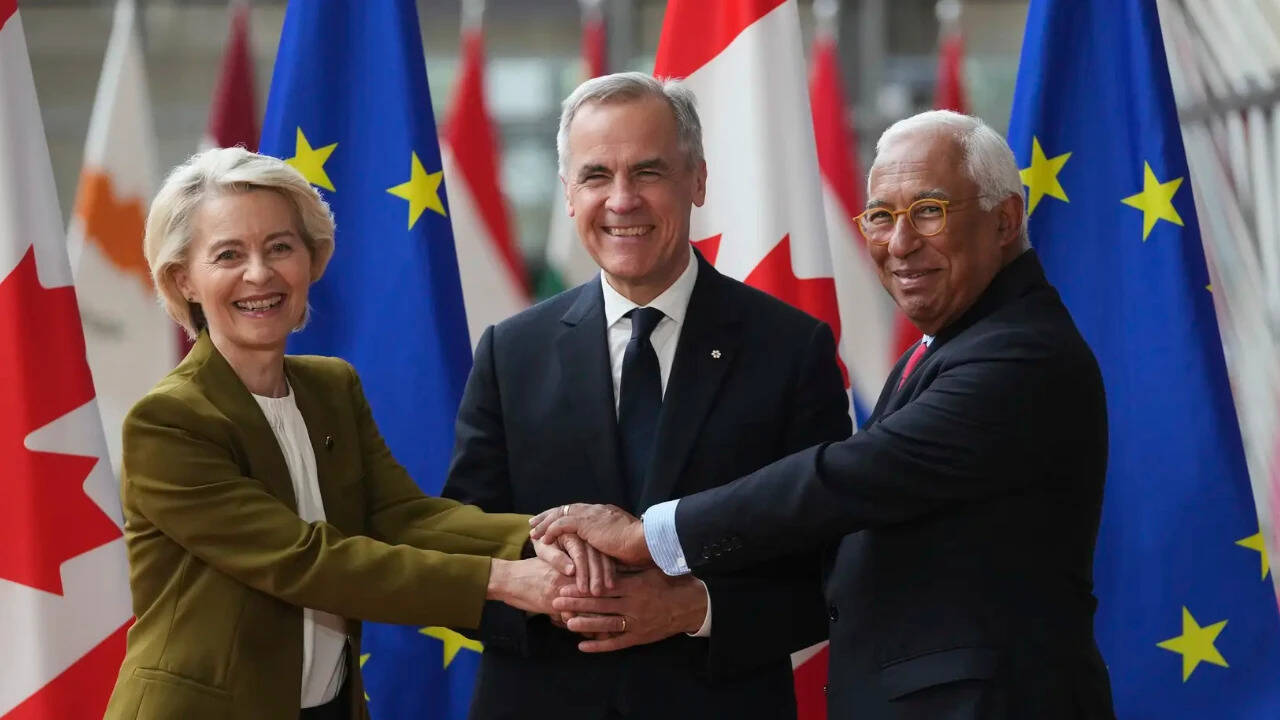

Canada EU associate membership discussions have emerged as a pivotal diplomatic and economic strategy as Ottawa navigates shifting global trade dynamics. Facing heightened economic friction and protectionist policies from its traditional southern partner, the United States, Canadian leadership under Prime Minister Mark Carney is aggressively pivoting toward Brussels. This comprehensive exploration examines the motivations, potential benefits, challenges, and structural implications of Canada pursuing a novel, closer integration model with the European Union.
Table of Contents
1. The Motivation Behind Canada EU Associate Membership
In recent years, the geopolitical landscape has undergone rapid transformation. Nations that once relied on decades-old, stable bilateral agreements are finding themselves vulnerable to sudden policy shifts and tariff threats. For Canada, the realization that over-reliance on a single economic partner poses severe national risks has spurred a search for robust alternatives.
Prime Minister Mark Carney has emphasized the necessity of economic diversification. By exploring associate status with the European Union, Canada aims to anchor its economy to one of the world’s largest and most stable single markets. This potential alignment goes beyond standard free trade agreements like CETA (Comprehensive Economic and Trade Agreement), pointing instead toward a deeper institutional integration reminiscent of models seen with select European Free Trade Association (EFTA) nations.
Key Catalysts for the Policy Shift
Several distinct factors have converged to bring the idea of Canada EU associate membership to the forefront of modern geopolitics:
- Unpredictable regulatory actions and tariff barriers introduced by the United States.
- A shared commitment between Ottawa and Brussels to green energy transitions and digital sovereignty.
- The desire to secure supply chains for critical minerals, advanced manufacturing, and technological innovation.
- Mutual strategic alignment regarding international security, democratic norms, and multilateral governance.
2. Evolution of Transatlantic and North American Trade
To understand the gravity of these current exploratory talks, one must examine the historical context of Canadian trade policy. Historically, the North American Free Trade Agreement (NAFTA) and its successor, the USMCA, formed the bedrock of Canadian commercial prosperity. However, repeated renegotiations and political volatility have strained this relationship.
Concurrently, Canada and the European Union successfully implemented CETA, which eliminated the vast majority of tariffs between the two regions. Despite this success, CETA remains a traditional trade pact rather than a partnership involving structural harmonization. Exploring associate membership represents a quantum leap forward, potentially addressing non-tariff barriers, regulatory alignments, and the movement of skilled labor.
| Dimension | CETA (Current Agreement) | Proposed Associate Membership |
|---|---|---|
| Tariffs | Mostly eliminated | Fully eliminated with deep integration |
| Labor Mobility | Limited professional visas | Enhanced free movement of workers |
| Regulatory Alignment | Minimal harmonization | Extensive synchronization |
3. Key Economic and Strategic Benefits
Should negotiations advance, an associate relationship with the European Union could yield profound advantages for Canadian industries. Policymakers have highlighted several vital areas of collaboration that promise mutual growth and resilience.
Worker Mobility and Services
A cornerstone of the current exploratory framework is the potential easing of restrictions on the free movement of services and skilled professionals. By granting professionals easier access to European markets, Canadian firms can tap into top-tier talent pools while offering their workforce expanded global career opportunities.
Energy and Technology Cooperation
Europe’s quest for secure, sustainable energy sources aligns perfectly with Canada’s status as an energy and critical mineral superpower. Furthermore, joint ventures in clean tech, artificial intelligence, and aerospace will ensure that both economies remain competitive against global superpowers like China and an increasingly protectionist United States.
4. Hurdles and Implementation Challenges
Despite the strategic allure, realizing a Canada EU associate membership framework involves immense diplomatic and technical complexities. Critics and analysts point out several formidable obstacles:
- Institutional Sovereignty: Ottawa would need to navigate how European regulations might apply domestically without ceding national legislative independence.
- Geographic Realities: Unlike traditional European neighbors, Canada’s physical distance from the continent introduces distinct logistical and supply chain variables.
- Ratification Process: Securing unanimous approval from all EU member states can be a notoriously slow and politically delicate endeavor.
5. Conclusion
The exploration of a Canada EU associate membership signifies a historic turning point in international relations. Driven by economic pragmatism and the need to insulate against mounting trade pressures from the United States, Prime Minister Mark Carney’s administration is charting a bold new course. While significant institutional and logistical challenges lie ahead, the potential rewards of deeper economic integration, enhanced labor mobility, and fortified security make this diplomatic endeavor one of the most critical geopolitical stories of the decade.