

Table of Contents
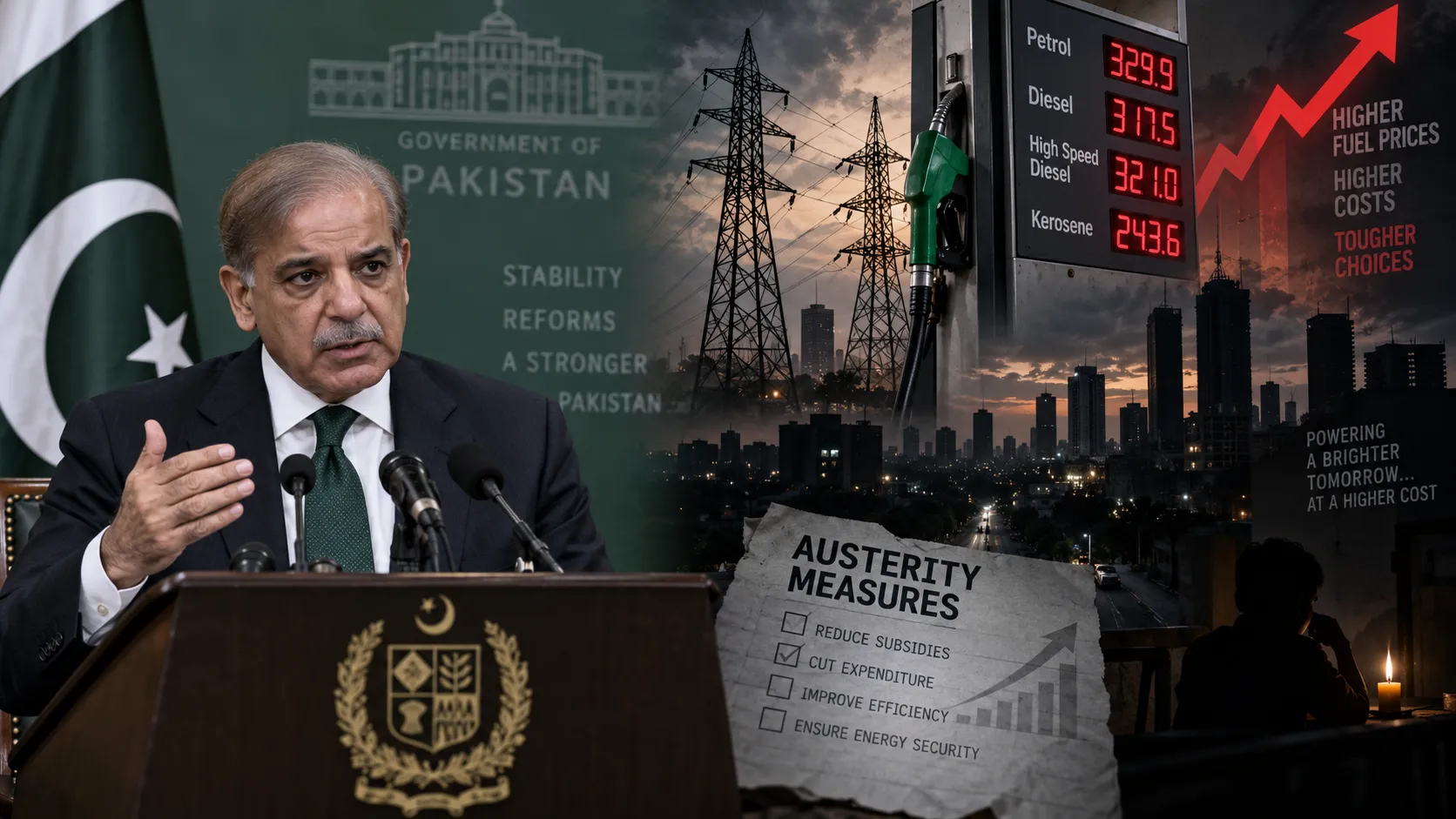
Pakistan is grappling with an escalating severe energy crunch as international shipping disruptions across critical Gulf trade corridors drive global petroleum costs upward. The administration led by Prime Minister Shehbaz Sharif finds itself under severe multi-front pressure.
Cabinet members have openly warned about the compounding effects of maritime supply bottlenecks in the Strait of Hormuz and Bab El-Mandeb, even as officials strive to protect everyday consumers from extreme economic shocks. This unfolding domestic challenge continues to test administrative resilience.
The mounting strain on public finances intensified following a recent overnight upward revision in petroleum tariffs. Authorities hiked petrol by PKR 4.10 per litre and high-speed diesel by PKR 6.41 per litre, bringing petrol to PKR 384.34 per litre and high-speed diesel to PKR 415.83 per litre.
These historic highs have triggered intense debate over how long the national economy can sustain the shockwaves of an aggressive global oil price spike, marking a critical turning point for the nation as leaders confront the expanding economic burden.
The situation remains deeply precarious for the administration as regional tensions continue to escalate across multiple fronts, forcing policymakers to carefully weigh every economic decision. Ministers are constantly evaluating incoming reports from international markets while trying to maintain internal stability during this severe energy crunch.
Consumers across the country are feeling the intense pinch of these escalating costs in their daily lives, driving widespread anxiety about future inflation and the overall cost of living. Business owners, transport operators, and average citizens alike are closely monitoring government pronouncements for any sign of relief or further policy shifts as the broader market volatility deepens.
Relief Schemes and Domestic Energy Mitigation During the Severe Energy Crunch
Addressing the public anxiety, Climate Change Minister Musadik Malik noted that the administration is attempting to absorb a fraction of the cost surge through a targeted fuel relief mechanism. This approach aims to provide temporary cushioning against immediate financial impacts.
Under this specific framework, motorcycle operators qualify for subsidized petrol allocations of up to five litres weekly, whereas automobile owners receive relief capped at ten litres every ten days. Malik emphasized that while this assistance does not completely neutralize the price hike, it represents the absolute maximum financial burden the state framework can currently endure.
Simultaneously, Energy Minister Awais Leghari highlighted critical vulnerabilities in supply chains, pointing out that national power facilities have remained operational despite disruptions by aggressively prioritizing domestic energy reserves. Government data shows that 72 percent of electricity generation relied on indigenous sources—such as hydroelectric generation, local coal deposits, nuclear energy, domestic gas, wind, and solar systems—while imported coal and re-gasified liquefied natural gas accounted for the remaining 28 percent.
The reliance on local resources has served as a vital buffer against wider shortages. External insights on regional developments can be reviewed through global coverage platforms for broader context.
To ensure swift execution, a National Steering Committee on Fuel Subsidy, chaired by deputy prime minister Ishaq Dar, has directed that payments to fuel stations be processed within 24 hours. The scheme, which was initially piloted in Islamabad, is now being rolled out across Pakistan to maximize its accessibility for eligible citizens facing a severe energy crunch.
- Petrol rates climbed to PKR 384.34 per litre following a PKR 4.10 increase.
- High-speed diesel reached PKR 415.83 per litre after a PKR 6.41 markup.
- Domestic energy generation met 72 percent of electricity demands in August.
- Spot cargo prices for RLNG surged to $23.25 per MMBtu amid supply bottlenecks.
Policy Adjustments and Political Fallout
Leghari explained that supply blockades involving RLNG drove spot cargo rates up to $23.25 per MMBtu. Maximizing local gas for electricity production helped the nation bypass purchasing excessively priced RLNG imports. Without this domestic substitution, the country could have experienced extended load shedding, while heavier dependence on furnace oil or imported gas would have inflated consumer tariffs by roughly PKR 10.6 billion.
Political friction is mounting concurrently alongside these economic pressures. The Jamaat-i-Islami party has issued warnings of widespread nationwide demonstrations if the government fails to lower petroleum rates. To manage rapid market fluctuations, Pakistan transitioned to a daily petroleum pricing framework back in July, replacing the older weekly system due to intense geopolitical volatility.
Furthermore, regional supplies faced an additional blow after Saudi Arabia temporarily shut down its major East-West oil pipeline following an aerial attack. While discussions regarding potential containment strategies like a smart lockdown or a four-day working week have circulated, cabinet ministers have clarified that no final decisions regarding strict lockdowns have been formally adopted. The compounding severe energy crunch continues to test administrative resilience.
Information minister Atta Tarar had previously indicated that austerity measures could be brought back if the regional situation worsened, reminiscent of measures used during regional conflicts such as a four-day working week and early market closures. However, Malik explicitly rejected reports that a smart lockdown was currently being discussed, confirming that no such formal deliberations had taken place.
Political opposition groups remain highly critical of the handling of the economy, demanding immediate relief and threatening aggressive street protests if prices are not reversed. This intense political backdrop adds another layer of complexity for the leadership as they attempt to balance fiscal constraints with social stability during this severe energy crunch.
Frequently Asked Questions
What caused the recent surge in petroleum prices in Pakistan?
The price spike stems from widening global disruptions along critical Gulf shipping corridors like the Strait of Hormuz and Bab El-Mandeb, alongside regional security incidents impacting key pipelines, which together drove up global oil costs and triggered a severe energy crunch.
These international supply bottlenecks continue to exert enormous pressure on domestic pricing mechanisms.
How does the government fuel relief scheme work?
The relief initiative provides subsidized petroleum allotments for eligible citizens, offering motorcyclists up to five litres weekly and car owners relief on up to 10 litres every 10 days to cushion the economic blow.
This program represents the maximum financial assistance the state can currently provide while managing a severe energy crunch.
What percentage of electricity came from domestic sources?
In August, 72 percent of Pakistan’s electricity generation was powered by indigenous resources including hydropower, local coal, nuclear power, domestic gas, wind, and solar energy, helping mitigate the domestic effects of the severe energy crunch.
Conclusion
As the international oil landscape remains volatile and maritime supply routes stay vulnerable, managing the ongoing severe energy crunch remains a formidable challenge for the administration. By leaning heavily on domestic energy reserves and implementing targeted relief initiatives, authorities are attempting to stabilize the economy while navigating intense domestic political scrutiny and external market pressures.
The path forward requires careful calibration of fiscal policies, continuous monitoring of international shipping lanes, and transparent communication with the public. Long-term energy security will ultimately depend on expanding indigenous generation capacity and reducing reliance on volatile imported hydrocarbons to prevent future iterations of the severe energy crunch.