

Table of Contents
Introduction to Isaac Newton Simplicity
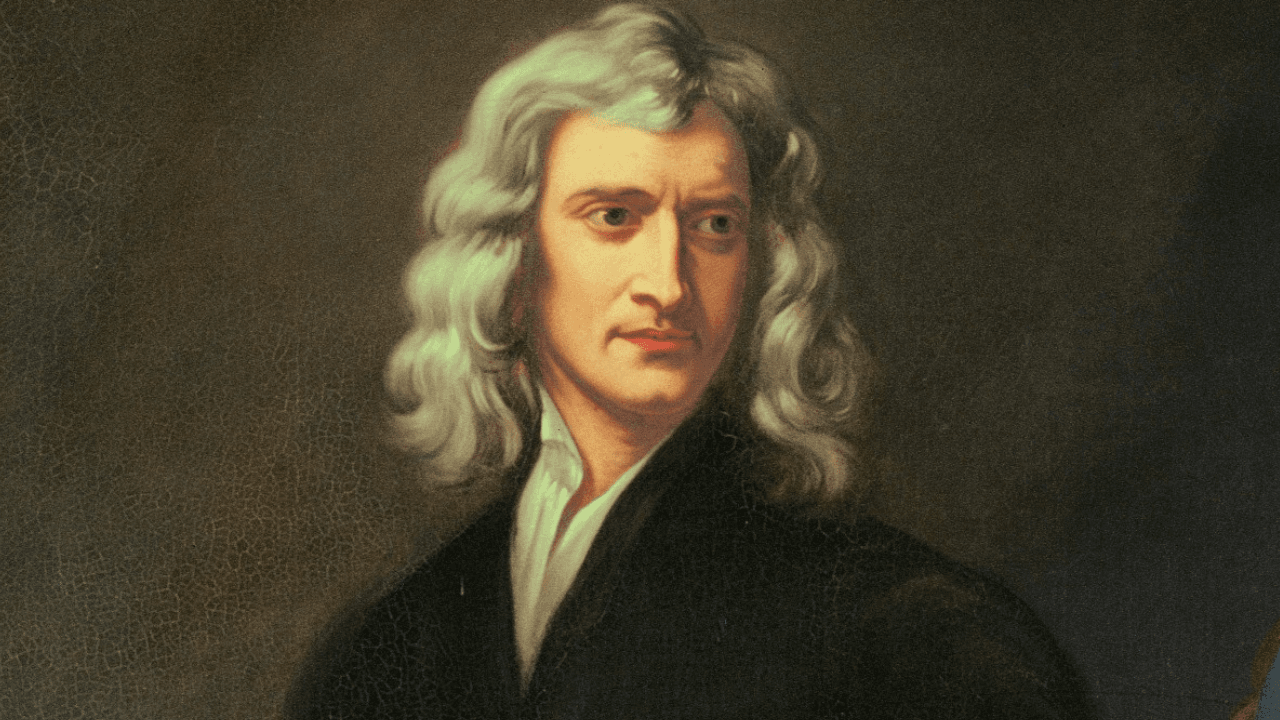
Sir Isaac Newton simplicity remains one of the most profound guiding principles in the history of human scientific inquiry. When exploring the vast expanse of the universe, modern thinkers and historical researchers alike often return to the foundational wisdom left behind by the legendary physicist. The famous assertion that truth is ever to be found in simplicity, and not in the multiplicity and confusion of things, continues to shape how we understand physics, mathematics, and the natural world today.

Figure 1: Conceptual illustration of scientific simplicity and universal laws.
The Biographical Context of a Scientific Genius
To fully appreciate why Isaac Newton emphasized simplicity, one must examine the turbulent yet brilliant era in which he lived. Born in Lincolnshire, England, in 1643, Newton emerged during a period of monumental scientific shift known as the Scientific Revolution. Working independently during the Great Plague of London, he formulated foundational concepts that would forever alter human civilization.
Key Achievements of the Scientific Revolution
- Formulation of the three laws of motion.
- Discovery of the universal law of gravitation.
- Development of infinitesimal calculus.
- Invention of the reflecting telescope.
Despite dealing with complex mathematical problems and chaotic natural phenomena, Newton consistently sought elegant, streamlined explanations. He believed that nature operates by fundamental rules that are fundamentally harmonious and straightforward.
Exploring the Ultimate Truth in Simplicity
The philosophical weight behind Newton’s perspective on simplicity extends far beyond mechanics. In an era when alchemy and complex theological debates often clouded empirical observation, his approach championed a streamlined view of reality. By stripping away unnecessary assumptions—a concept closely related to Occam’s Razor—he focused on observable, quantifiable data.

Figure 2: Classic scientific instruments reflecting the pursuit of core truths.
Why Simplicity Matters in Research
When analyzing complex datasets or cosmological events, scientists often find that incorrect theories tend to be overly complicated. Conversely, accurate physical laws are remarkably concise. This characteristic makes the pursuit of simplicity an essential roadmap for future scientific breakthroughs.
Core Newtonian Principles in Modern Science
The legacy of Isaac Newton simplicity can be seen directly in how contemporary researchers construct theoretical models. Whether dealing with quantum mechanics or astrophysics, the goal remains finding the most direct mathematical representation of physical reality.
| Historical Concept | Original Formulation | Modern Application |
|---|---|---|
| Motion | Three Universal Laws | Aerospace Engineering |
| Gravity | Inverse-Square Law | Satellite Orbital Mechanics |
| Optics | Spectrum Analysis | Advanced Telecommunications |
As highlighted in various history of science articles, these foundational frameworks remain as robust today as they were centuries ago.
The Lasting Legacy of Mathematical Elegance
The enduring appeal of Newtonian philosophy lies in its clarity. As science advances into new frontiers in 2026, researchers frequently encounter overwhelming amounts of data. Remembering the core tenets of Isaac Newton simplicity helps prevent intellectual paralysis, guiding researchers toward clear, testable hypotheses.

Figure 3: The universe viewed through the lens of elegant physical laws.
Conclusion
Sir Isaac Newton simplicity remains a timeless beacon for thinkers, scientists, and philosophers. By cutting through the noise and focusing on fundamental truths, humanity continues to unlock the deepest mysteries of the universe. Embracing this philosophy ensures that future discoveries will remain grounded in elegance, clarity, and empirical truth.