

Table of Contents
Introduction: Unraveling the Mystery of Miracinonyx trumani
For generations, paleontologists and wildlife enthusiasts believed that North America once played host to its very own true cheetah species. Known scientifically as Miracinonyx trumani, this magnificent predator roamed the prehistoric landscapes with a body plan that strongly mirrored the modern African cheetah. However, recent scientific breakthroughs involving ancient DNA have completely rewritten our understanding of feline evolution and adaptation across the continent.
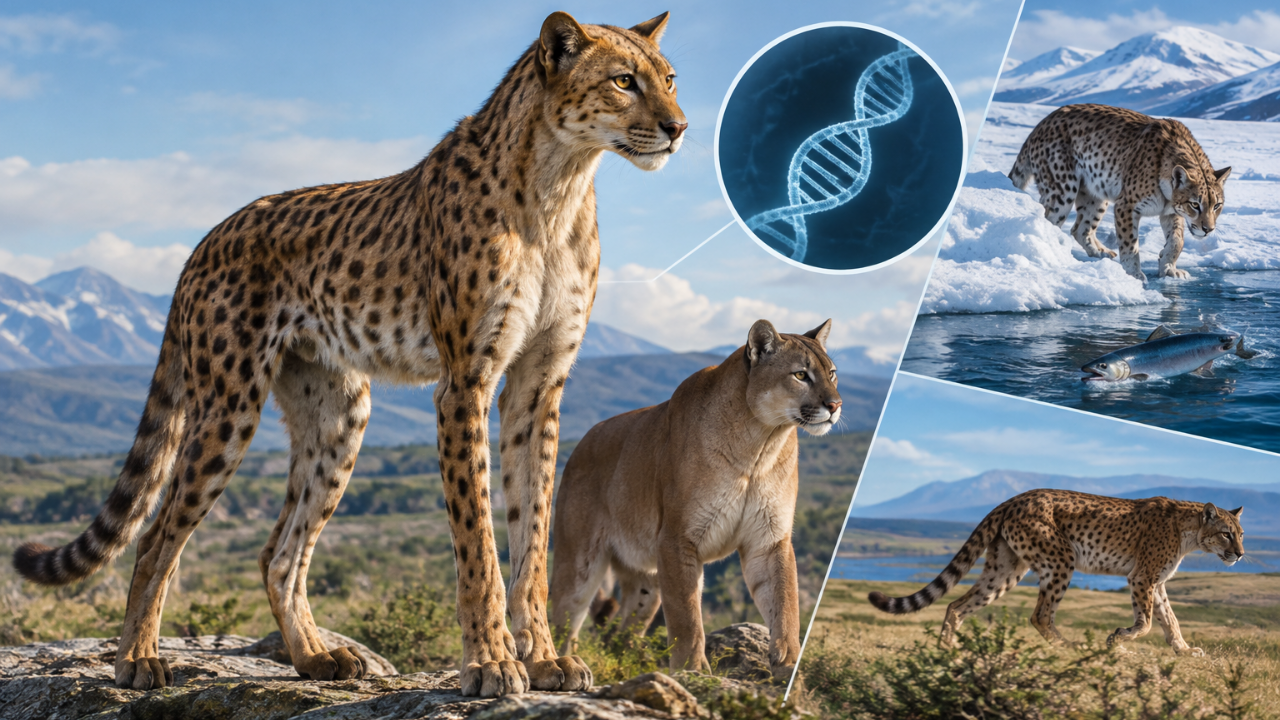
Through advanced genetic sequencing, researchers have discovered that despite sharing a remarkably similar skeletal structure and predatory niche with the cheetah, this extinct predator actually diverged from the puma lineage approximately 2.6 million years ago. This revelation highlights the incredible power of convergent evolution, showing how different species can independently develop similar physical traits to conquer comparable ecological challenges.

The Ancient DNA Breakthrough
For decades, scientific consensus relied heavily on morphology—the study of physical form and bone structure. Because Miracinonyx trumani possessed long limbs, flexible spines, and adaptations suited for high-speed running, experts naturally classified it as a close relative of the modern cheetah, Acinonyx jubatus. Yet, bones can sometimes tell only part of the story.
The game changed when paleogeneticists managed to extract and sequence usable genetic material from ancient fossil specimens found in North American caves. Analyzing this ancient DNA allowed scientists to look past physical appearances and examine the foundational blueprint of the animal. The genetic data proved definitive: the cat’s closest living relative is the puma (Puma concolor), rather than the Old World cheetah.
Understanding Evolutionary Convergence
The striking physical similarities between the American cheetah-like cat and actual cheetahs represent a classic textbook example of convergent evolution. When two unrelated species occupy similar ecological niches—in this case, pursuing fast-moving prey across open grasslands—natural selection often guides them toward similar anatomical solutions.
Key Adaptations Shared with Cheetahs
- Elongated limbs built for explosive sprinting acceleration.
- Specialized nasal cavities for increased oxygen intake during high-speed chases.
- Semi-retractable claws that function similarly to running spikes on an athletic shoe.
Despite these external likenesses, the internal genetic markers kept the truth hidden until modern sequencing techniques opened a new window into the prehistoric past.

Life in Pleistocene North America
During the Pleistocene epoch, North America was a dynamic and harsh environment teeming with megafauna. Miracinonyx trumani was not the only apex predator of the era; it shared the landscape with saber-toothed cats, dire wolves, and early American lions. To survive, these predators had to be remarkably adaptable.
Evidence suggests that this unique feline possessed capabilities beyond simple grassland sprinting. In colder northern regions, fossil evidence indicates these cats may have adapted to aquatic hunting, utilizing their agility to catch fish in frigid rivers and lakes during periods of seasonal resource scarcity.
Factors Behind the Extinction
Like many of the iconic megafauna that vanished at the end of the last ice age, Miracinonyx trumani ultimately succumbed to a combination of environmental pressures and genetic vulnerability. Recent genetic analyses have revealed that these populations maintained low genetic diversity, which severely limited their ability to adapt to rapid climate shifts and changing prey distributions.
| Factor | Impact on Population |
|---|---|
| Climate Shift | Rapid warming altered traditional grassland and forest habitats. |
| Prey Decline | Extinction of key megafauna species reduced primary food sources. |
| Low Diversity | Restricted gene pool prevented successful adaptation to new pressures. |
Conclusion
The reclassification of Miracinonyx trumani serves as a powerful reminder of how much remains to be discovered about our planet’s ancient history. By combining traditional paleontology with cutting-edge ancient DNA analysis, researchers continue to refine our understanding of evolution, proving that appearances can indeed be deceiving in the natural world.