
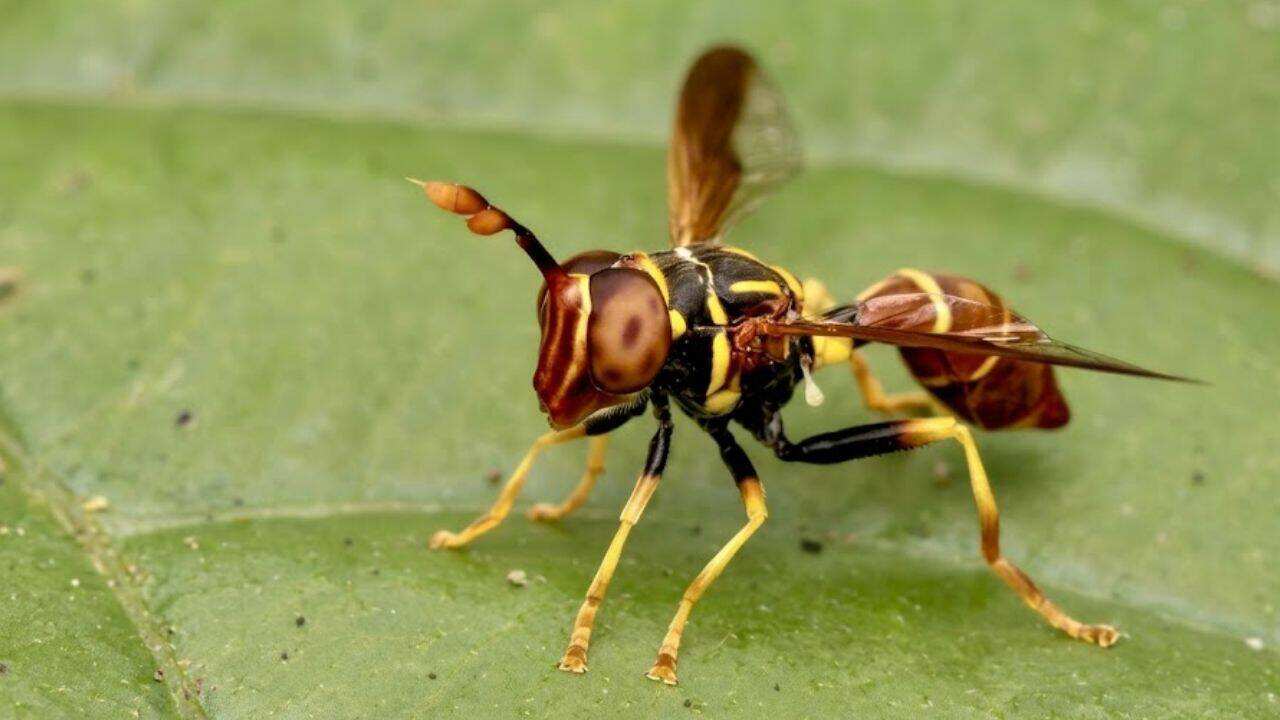

When amateur naturalist Franklin Howley-Dumit Serulle uploaded an everyday insect photograph to the online platform iNaturalist, he had no idea he was sparking a major scientific breakthrough. That single digital image became the catalyst for the formal identification of Monoceromyia ndidiae, a brand-new hoverfly species that has captured the attention of the global scientific community and earned the prestigious Swiss Systematics Society’s New Species of the Year 2026 title. This remarkable discovery underscores the immense power of citizen science in modern biological research.
Table of Contents
The Power of Citizen Science in Modern Entomology
Amateur naturalists and hobbyist photographers play an increasingly vital role in mapping global biodiversity. Platforms like iNaturalist allow everyday nature enthusiasts to document wildlife encounters, creating vast digital databases that professional researchers actively monitor. These crowdsourced observations often bridge critical data gaps, particularly in tropical and biodiverse regions where field researchers cannot be everywhere at once.
Franklin Howley-Dumit Serulle’s contribution is a prime example of how digital platforms empower everyday citizens to advance professional science. By capturing a high-resolution photograph of an unusual insect and uploading it for community identification, he provided the initial clue that something entirely unknown to science was flying right beneath our noses.
How Online Platforms Support Taxonomy
Taxonomy—the science of naming, describing, and classifying organisms—is traditionally a slow, meticulous process. However, digital communities accelerate initial discoveries by:
- Connecting amateur photographers with professional taxonomists.
- Providing geotagged and timestamped visual data.
- Enabling rapid peer review of unusual biological specimens.
- Highlighting rare population distributions across protected areas.
From Digital Photograph to Valle Nuevo National Park
Following the initial upload on iNaturalist, professional entomologists took notice of the distinct morphological features displayed in the photograph. Recognizing potential scientific significance, researchers organized targeted field expeditions to confirm the observation in the wild.
Subsequent fieldwork led scientists to the lush ecosystems of Valle Nuevo National Park, a protected area renowned for its unique microclimates and high levels of endemism. During surveys within the park, researchers successfully located a physical specimen matching the digital observation, validating the existence of the species and providing the necessary material for formal scientific description.
Why Valle Nuevo National Park Matters
Located in the Caribbean, Valle Nuevo National Park offers diverse habitats ranging from high-altitude pine forests to cloud-shrouded montane zones. These isolated ecosystems frequently harbor endemic species found nowhere else on Earth. The discovery of Monoceromyia ndidiae further emphasizes the critical need to fund and protect these vital ecological sanctuaries against deforestation and climate change.
Rigorous Laboratory Analysis and Formal Description
Finding a physical specimen in the field is only the first step in naming a new animal. Once researchers secured the specimen from Valle Nuevo National Park, it underwent comprehensive laboratory analysis.
Taxonomists examined minute anatomical structures, analyzed genetic markers, and compared the physical traits against existing records in global museum collections. This rigorous evaluation confirmed that the hoverfly belonged to the genus Monoceromyia and represented a distinct, previously undescribed species. The insect was subsequently named Monoceromyia ndidiae, permanently cementing its place in taxonomic history.
The Broader Impact on Biodiversity Conservation
The recognition of Monoceromyia ndidiae as the Swiss Systematics Society’s New Species of the Year 2026 highlights a broader paradigm shift in conservation biology. Integrating public participation with rigorous academic research expands our understanding of fragile ecosystems.
As habitats face unprecedented pressure from human expansion, discovering new species reminds us of how much biodiversity remains undocumented. Empowering local naturalists ensures continuous, localized monitoring that professional institutions alone cannot sustain.
Conclusion
The incredible journey of Monoceromyia ndidiae—from a casual snapshot on iNaturalist to an award-winning scientific discovery—demonstrates the transformative potential of citizen science. Thanks to the sharp eye of Franklin Howley-Dumit Serulle and the dedication of taxonomic researchers, the world has gained a deeper appreciation for the hidden wonders of Valle Nuevo National Park. This milestone encourages budding naturalists everywhere to keep exploring, photographing, and sharing the natural world around them.