
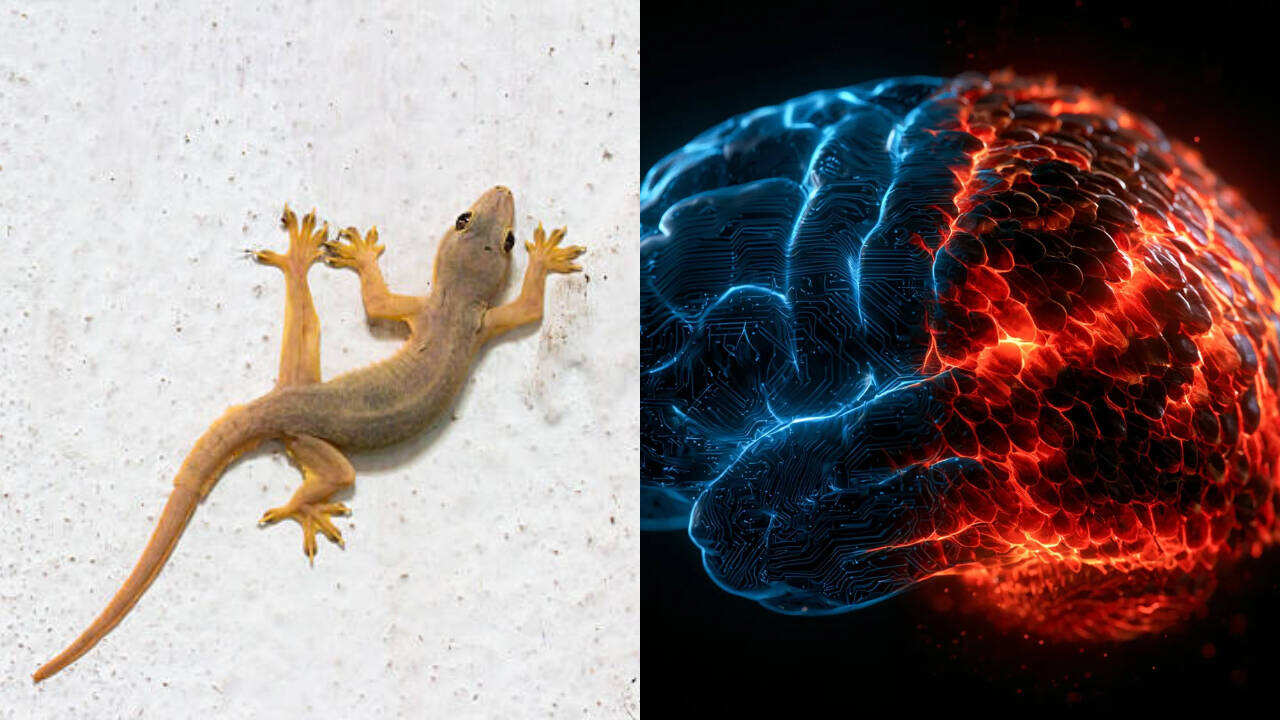

The lizard brain theory has long dominated how society understands human intelligence, emotion, and behavior. For decades, popular psychology and neuroscience education taught that human brains evolved in layers, stacking advanced cognitive centers on top of a primitive, reptilian core responsible for basic survival instincts. However, modern evolutionary neurobiology is completely rewriting this narrative. Recent scientific investigations demonstrate that this 70-year-old framework is fundamentally flawed, offering an extraordinary look into how human intelligence actually developed through complex neurological rewiring rather than simple architectural layering.
Table of Contents
Origins of the Triune Brain Model
To understand the current scientific revolution, we must first examine where the concept originated. In the mid-20th century, physician and neuroscientist Paul MacLean proposed the “Triune Brain” hypothesis. MacLean suggested that the human brain evolved in three distinct stages:
- The Reptilian Brain: The oldest layer, controlling basic survival, territoriality, and autonomic functions.
- The Paleomammalian Brain (Limbic System): The middle layer, associated with emotions, social bonding, and maternal care.
- The Neocortex: The newest layer, responsible for abstract thought, reasoning, and language.
This model offered a neat, intuitive way to explain why humans often struggle between rational thought and raw impulse. It gained massive cultural traction, appearing in countless self-help books, corporate leadership seminars, and introductory psychology textbooks. Yet, despite its popularity, comparative neurobiologists have quietly harbored doubts for decades.
The Flaws in Reptilian Brain Comparisons
Modern genetic sequencing and advanced neuroimaging have thoroughly dismantled MacLean’s hierarchical assumptions. Researchers analyzing the brains of modern reptiles, birds, and mammals have discovered that the fundamental building blocks of vertebrate brains are remarkably similar, rather than progressively stacked.
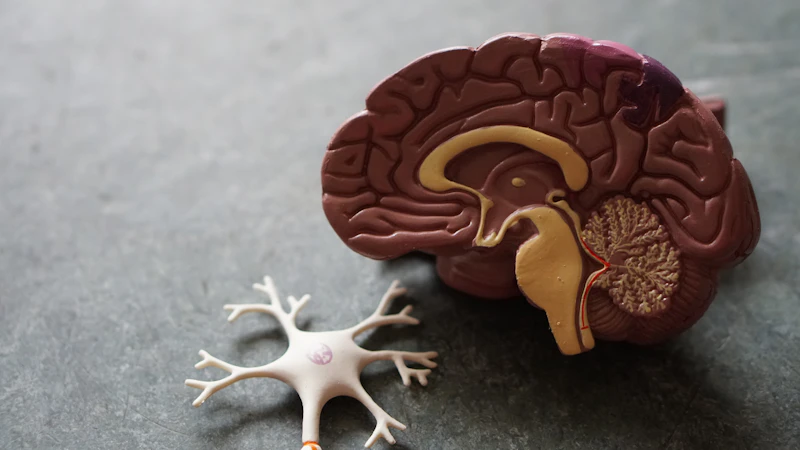
Reptiles do not possess a simple, primitive processing unit. Instead, their brains contain highly specialized structures capable of complex learning, sophisticated spatial navigation, and nuanced social behaviors. The notion that a lizard possesses a simplified version of a human’s deepest subconscious impulses is simply inaccurate. Evolution does not build new organisms by stacking entirely new operating systems onto old ones; rather, it continuously rewires and repurposes existing neural circuits.
The Wiring Battle That Shaped Human Intelligence
Recent studies suggest that human intelligence emerged not from adding new brain layers, but from an intense internal “wiring battle” among existing networks. As hominids faced shifting environmental pressures, social complexities, and ecological challenges, the connections between different brain regions underwent massive optimization.
- Expanded communication pathways between sensory processing units and executive control networks.
- Enhanced synaptic plasticity allowing for rapid adaptation to novel situations.
- Reallocation of neural real estate to support complex language and abstract reasoning.
This evolutionary tug-of-war favored flexibility over rigidity. Rather than a primitive core fighting a civilized cortex, the entire brain operates as a unified, highly integrated network where ancient and modern regions work in continuous synchronization.
Implications for Modern Neuroscience
Discarding the outdated triune model opens new avenues for treating mental health disorders, understanding neurological conditions, and studying cognitive development. When clinicians view psychiatric disorders through the lens of integrated network dysfunction rather than a “revolt of the lizard brain,” targeted therapies become much more precise.
Furthermore, this shift emphasizes the continuity of life on Earth. Humans are not walking museums containing the minds of reptiles and primitive mammals; we are the product of an unbroken lineage of continuous, highly sophisticated neural adaptation.
Conclusion
The dismantling of the 70-year-old lizard brain theory marks a monumental shift in how science views human cognition. By replacing a rigid, hierarchical view of brain evolution with a dynamic, interconnected network perspective, researchers are paving the way for a deeper understanding of what makes human intelligence truly unique.