

Table of Contents
Introduction
Plastic waste bricks are changing the landscape of sustainable construction and environmental management. A team of visionary Dutch engineering students recently claimed victory in a prestigious global hackathon by developing a groundbreaking solar-powered micro-factory. This system is designed to convert discarded plastic debris directly into durable construction materials. As the world grapples with mounting plastic pollution and severe housing shortages, this ingenious initiative offers a dual solution that addresses both crises simultaneously. By harnessing renewable energy, the project sets a new standard for decentralized manufacturing and community empowerment.

The Innovative Concept
The core philosophy behind the project is to create localized value from materials that are typically discarded as trash. Traditional recycling methods often involve transporting waste to centralized facilities, which consumes fossil fuels and incurs high logistical costs. In contrast, this micro-factory model brings the recycling process directly to the communities generating the waste. Through careful engineering and creative problem-solving, the student team designed a compact system that operates entirely off the electrical grid.
Origins of the Idea
The concept originated during an intense international hackathon where participants were challenged to devise scalable solutions for developing regions. Recognizing that many communities face a chronic shortage of affordable housing alongside overwhelming accumulations of plastic trash, the students focused on bridging these two distinct challenges. Their winning proposal combined clean energy technology with industrial design to create a portable, easy-to-operate production unit.
How the Solar Micro-Factory Works
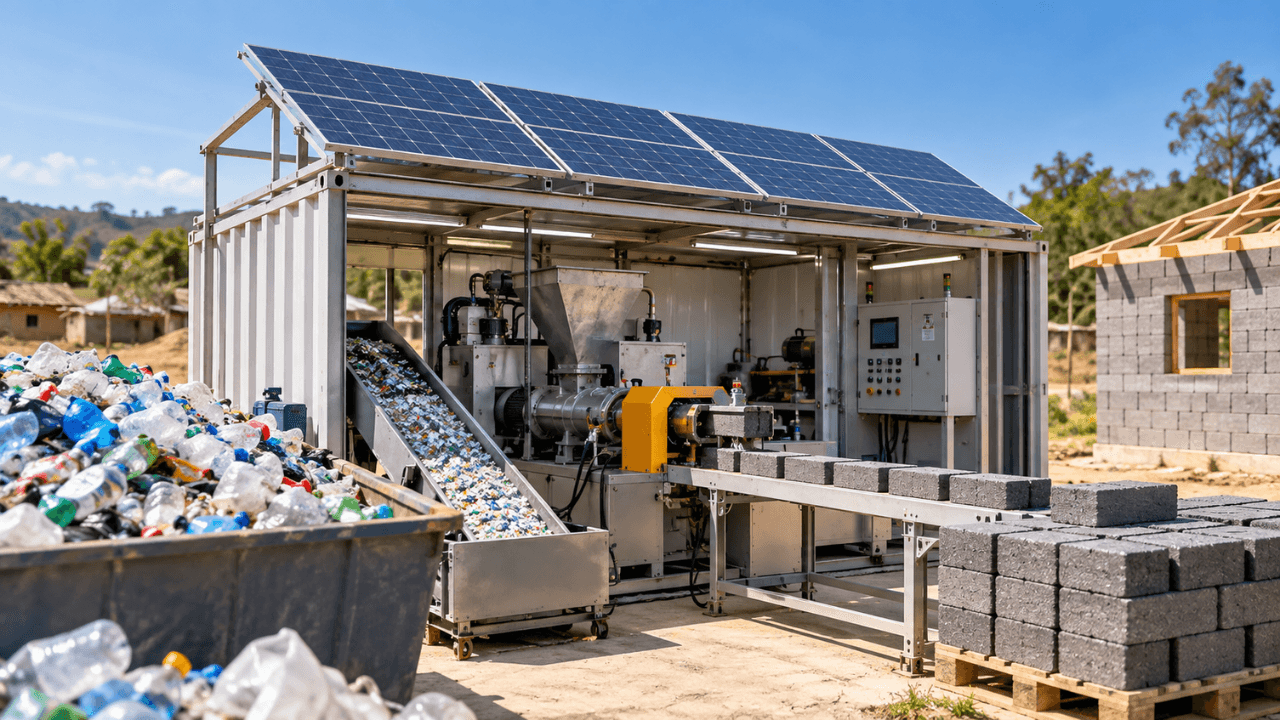
Understanding the inner workings of the facility reveals its remarkable efficiency. The system is built into a transportable container or modular frame, making it simple to ship and deploy in remote or underserved areas. Solar panels mounted on or near the unit capture abundant tropical sunlight, converting it into reliable electrical energy to power the internal machinery.
- Collection and Sorting: Local residents gather discarded plastics, which are then sorted by polymer type to ensure structural integrity.
- Shredding: The sorted plastic is fed into an industrial shredder that breaks the items down into manageable flakes.
- Melting and Compression: Solar-powered heating elements melt the flakes, and a specialized press molds the mixture into sturdy building blocks.
This streamlined process requires minimal technical training, allowing local workers to manage operations independently and generate local employment opportunities.
Testing and Implementation in Ghana
A functional prototype of the micro-factory is currently undergoing rigorous real-world testing in Ghana. Partnering with local organizations and municipal groups, the student team is evaluating the durability, cost-effectiveness, and practical usability of the resulting blocks under authentic climatic conditions. Ghana, like many nations, experiences significant challenges regarding waste management and affordable housing construction.
Early feedback from the field trials has been remarkably positive. Local builders have utilized the blocks to construct safe, weather-resistant structures. These initial successes provide critical data that the engineering team will use to refine the machinery and optimize the production workflow for future deployments.
Addressing Global Challenges
The implications of this student-led innovation extend far beyond local testing grounds. By turning problematic waste streams into durable building bricks, the project tackles multiple Sustainable Development Goals set by international bodies. Key benefits include:
- Reduction of plastic pollution in oceans and landfills.
- Creation of affordable, disaster-resistant housing options.
- Empowerment of marginalized communities through green jobs.
- Promotion of clean, off-grid energy usage.
Moving forward, the project coordinators are actively seeking additional research grants and strategic partnerships to scale the initiative. Expanding manufacturing capabilities will allow more regions to benefit from this transformative technology.
Conclusion
The Dutch students’ solar-powered micro-factory demonstrates the profound impact that innovative engineering can have on global environmental and social issues. By converting plastic waste bricks into reliable building materials, this project offers a beacon of hope for sustainable urban development. As testing continues in Ghana and funding opportunities expand, the world watches closely to see how this portable recycling solution reshapes the future of housing and waste management.