
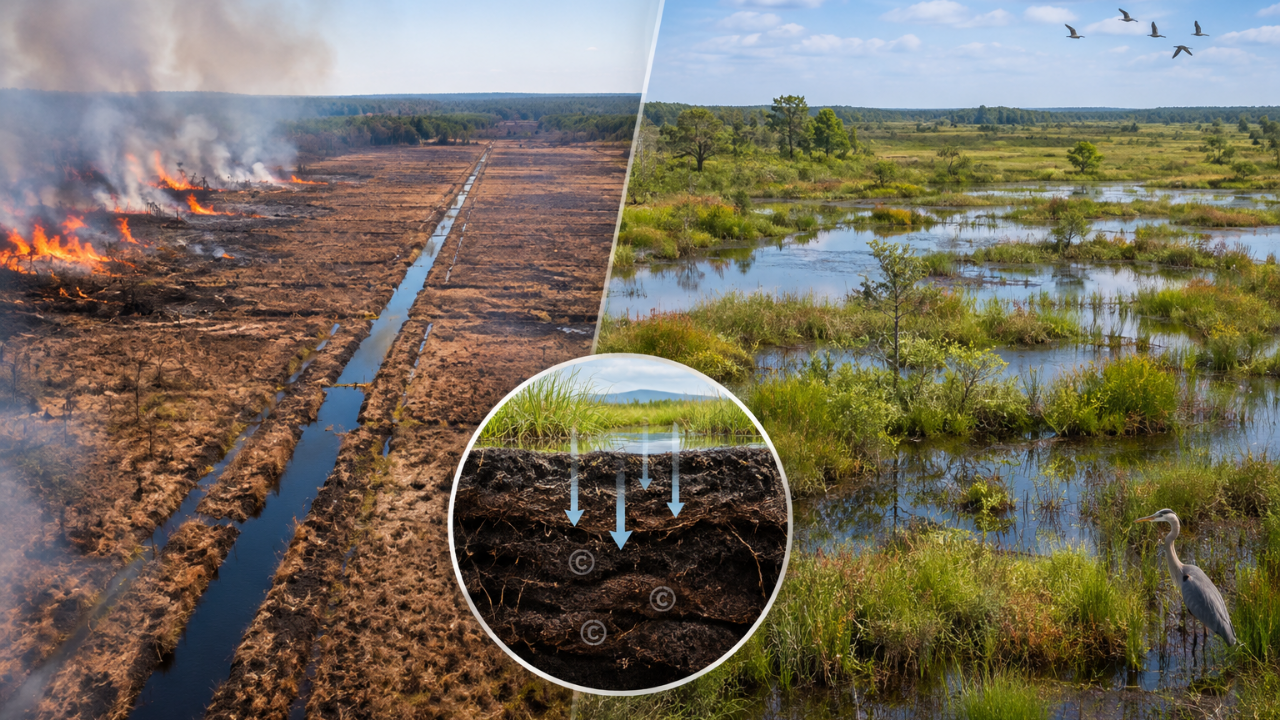

North Carolina peatland restoration has emerged as a critical environmental priority following decades of ecological degradation caused by historical agricultural misadventures. For generations, wetlands were frequently viewed as unproductive wasteland rather than vital ecosystems. In an ambitious farming venture decades ago, workers cut 50 miles of drainage ditches through a sprawling 23-square-mile tract of ancient wetlands. This intervention fundamentally altered the hydrology of the region, transforming a massive natural carbon sink into a severe greenhouse gas emitter.
Table of Contents
The Anatomy of a Carbon Disaster
Peatlands are among the most efficient carbon storage systems on the planet. Composed of partially decayed organic matter accumulated over thousands of years under waterlogged conditions, these wetlands lock away massive amounts of carbon dioxide. However, when humans intervene by installing drainage networks, the delicate balance is immediately broken.
The specific North Carolina tract in question lost its natural moisture when dozens of miles of trenches lowered the regional water table. Without the protective layer of standing water, the ancient organic soil was exposed to oxygen for the first time in millennia. This exposure triggered rapid aerobic decomposition by microbes, converting solid carbon stored in the peat directly into atmospheric carbon dioxide.

How Draining Peatlands Releases CO2
Understanding the sheer scale of emissions from damaged wetlands requires looking at the biochemical processes at play. When a wetland is saturated, organic material decomposes extremely slowly due to the lack of oxygen. Cutting ditches reverses this protective mechanism entirely.
- Water Table Drop: Lowering water levels exposes deep layers of peat to the atmosphere.
- Microbial Activation: Oxygen-loving bacteria rapidly break down the exposed organic matter.
- Continuous Venting: The process is relentless, resulting in the site releasing approximately 130,000 tons of CO2 annually.
This staggering volume equates to the annual emissions of tens of thousands of passenger vehicles, turning a natural climate stabilizer into a localized climate crisis.
Ecological Impacts Beyond Carbon
While greenhouse gas emissions represent a primary concern, the transformation of this 23-square-mile tract triggered multiple cascading ecological failures. Biodiversity suffered immensely as native wetland flora and fauna lost their specialized habitats. Furthermore, dried peatlands become highly susceptible to catastrophic underground wildfires that can smolder for months, releasing even more toxic smoke and carbon.
Hydrological regulation was also compromised. Healthy wetlands act as natural sponges, absorbing heavy rainfall and mitigating downstream flooding. The network of agricultural ditches accelerated runoff, straining local watersheds and reducing water quality.
The Restoration Blueprint
To counteract these massive emissions, scientists and environmental agencies have devised a comprehensive intervention strategy centered on rehydration. The primary objective is to reverse the drainage process by systematically blocking the 50 miles of legacy ditches.
| Action | Mechanism | Expected Benefit |
|---|---|---|
| Ditch Plugging | Installing earthen and wooden dams | Raises the local water table |
| Rewetting Peat | Submerging organic layers in water | Halts aerobic microbial decomposition |
| Vegetation Recovery | Encouraging native wetland plants | Restores long-term carbon sequestration |
By trapping rainwater and runoff within the tract, conservationists aim to recreate the waterlogged conditions that protected the peat for centuries.
Challenges and Future Outlook
Restoring a degraded wetland is a complex, multi-year undertaking. Engineers must carefully monitor water levels to ensure the land rehydrates evenly without unexpectedly flooding adjacent private properties or infrastructure. Additionally, monitoring greenhouse gas fluxes before and after intervention will provide crucial data for future wetland restoration projects globally.
Ultimately, turning this carbon liability back into a thriving carbon sink demonstrates the viability of nature-based climate solutions. As similar initiatives scale up worldwide, repairing historical environmental mistakes offers a powerful tool in the global fight against climate change.
Conclusion
The transformation of a failed North Carolina farming venture into a massive carbon emitter highlights the fragility of our natural ecosystems. However, proactive restoration efforts—specifically blocking drainage ditches to rehydrate ancient peatlands—offer a clear path toward healing the landscape. By returning water to these vital carbon sinks, scientists can successfully curb thousands of tons of annual emissions and restore crucial biodiversity.