

Table of Contents
Introduction to Porpoise Acoustic Monitoring
Marine research has entered a groundbreaking era thanks to advancements in underwater acoustic sensors. Porpoise acoustic monitoring off the coast of Cornwall has recently yielded extraordinary data that sheds light on the complex social lives and communication systems of these elusive cetaceans. Harbour porpoises are notoriously difficult to study directly in the wild due to their shy nature and the murky waters they often inhabit. However, stationary hydrophones and advanced listening devices are changing our understanding of marine mammal behavior by capturing sounds that human ears could never hope to detect naturally.

The Cornwall Incident: What the Sensors Captured
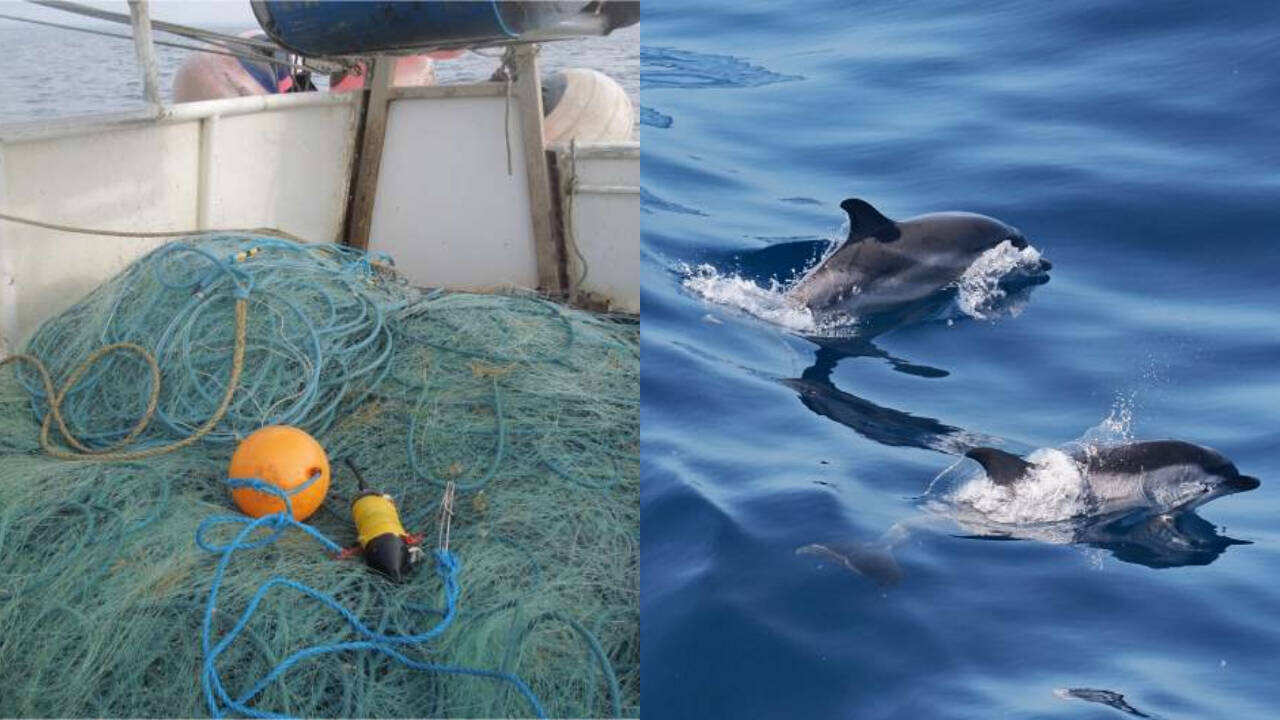
In a rare and heartbreaking event recorded off the rugged coast of Cornwall, underwater sensors successfully captured a sequence of events involving a trapped harbor porpoise and its companions. One individual became accidentally entangled in a fishing net, a common yet perilous hazard for many marine species. What made this recording uniquely significant to marine biologists was the immediate vocal response from two nearby animals.
As the trapped porpoise struggled, the adjacent animals began emitting rapid, highly structured clicking sequences. Researchers analyzing the audio files believe these vocalizations represent potential distress calls and coordinated communication between the distressed animal and its pod members or nearby conspecifics.
Analyzing the Acoustic Signatures
Bioacousticians examined the frequency, amplitude, and repetition rate of the captured sounds. Harbour porpoises typically communicate using high-frequency clicks known as echolocation clicks, usually around 130 kHz. The recorded distress sequence showed a dramatic shift in click patterns, demonstrating emotional or physical stress that mirrors stress responses found in other intelligent mammals.
Understanding Porpoise Communication and Distress Calls
For decades, scientists debated whether small cetaceans like porpoises possess complex communication systems capable of conveying distress or emotional states. Unlike dolphins, which produce a wide variety of whistles and squeaks easily audible to humans, porpoises rely almost exclusively on narrow-band high-frequency clicks. This specialization makes studying their vocal repertoire exceptionally challenging.
Recent technological breakthroughs in passive acoustic monitoring allow researchers to continuously record underwater soundscapes. This capability has revealed that porpoise acoustic behavior is far more nuanced than previously assumed. When faced with life-threatening scenarios such as net entanglement, their vocal output changes noticeably, providing crucial clues into how they alert others to danger.
| Vocalization Type | Frequency Range | Behavioral Context |
|---|---|---|
| Standard Echolocation | Around 130 kHz | Navigation, foraging, and general environment scanning |
| Suspected Distress Calls | Variable high-intensity bursts | Entanglement, predator threat, and social separation |
Implications for Marine Conservation and Fishing Nets
Bycatch—the accidental capture of non-target species like porpoises, dolphins, and seals in commercial fishing gear—remains one of the single greatest threats to marine biodiversity. The Cornwall recording underscores the urgent need for innovative mitigation strategies in commercial fisheries. Traditional monitoring relies heavily on visual sightings, which are largely ineffective during rough seas, night hours, or when animals are submerged.
New Tools for Preventing Bycatch
Conservation groups and fisheries are currently exploring several technological solutions to reduce marine mammal entanglements:
- Acoustic Deterrent Devices (Pingers): Small underwater devices attached to nets that emit sounds discouraging porpoises from approaching fishing gear.
- Modified Net Materials: Developing stronger yet more visible or acoustically reflective nets that allow cetaceans to detect and avoid them early.
- Real-Time Acoustic Monitoring: Deploying smart listening stations that alert nearby fishing vessels when high concentrations of marine mammals or distress signatures are detected.
Conclusion
The remarkable audio captured off Cornwall provides invaluable insight into the hidden lives of harbor porpoises and highlights the profound risks they face from human activities in the ocean. By harnessing advanced underwater sensors, researchers can better understand cetacean communication and develop more effective conservation measures. Protecting these intelligent marine mammals requires ongoing collaboration between scientists, conservationists, and the fishing industry to ensure our oceans remain safe for all inhabitants.