
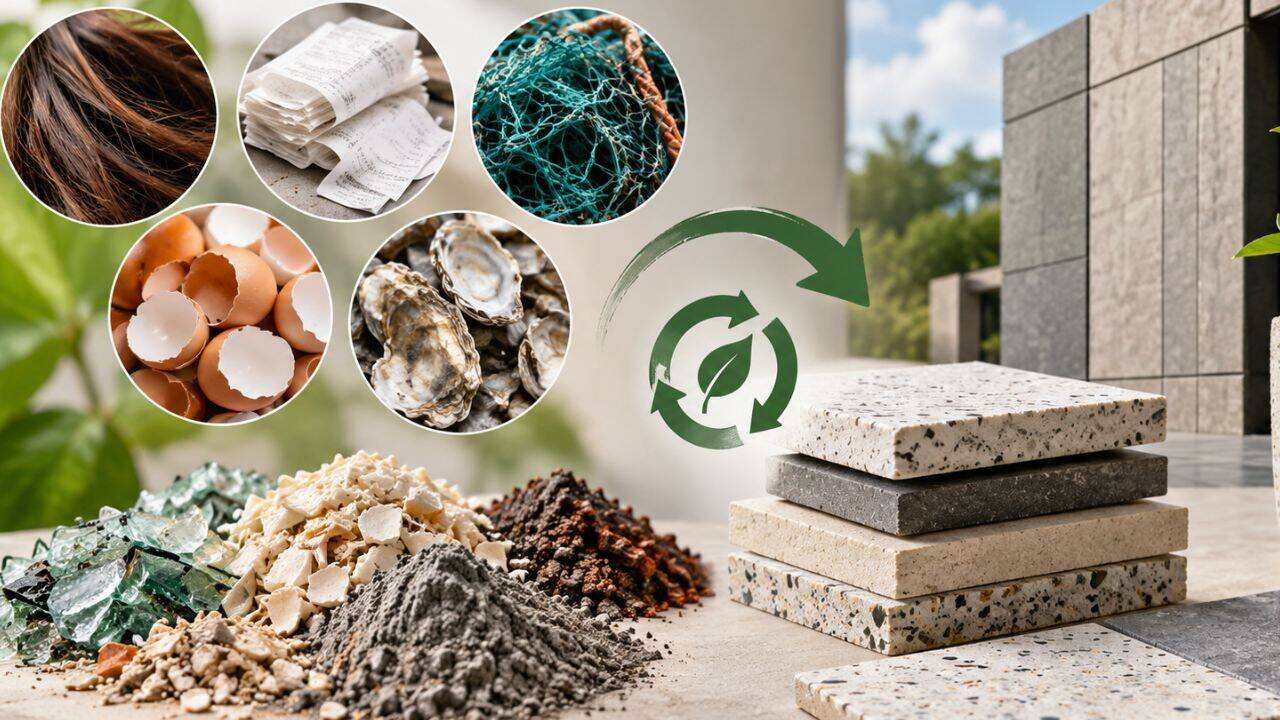

Finding sustainable alternatives in the construction sector has never been more critical, and a groundbreaking James Dyson Award project is leading the charge by utilizing waste cement components to revolutionize building materials. The global construction industry is one of the largest emitters of carbon dioxide, primarily driven by traditional cement manufacturing processes that require intensive energy and raw resource extraction. To combat this environmental crisis, researchers have rigorously tested 17 distinct waste materials—ranging from discarded fishing nets to everyday eggshells—to evaluate their potential to create stronger, lower-carbon cement building products.
Table of Contents
The Environmental Challenge of Traditional Cement
Traditional cement relies heavily on the extraction of virgin limestone and other raw aggregates, a process that scars landscapes and depletes natural ecosystems. Furthermore, the chemical reactions involved in producing ordinary Portland cement release massive quantities of greenhouse gases directly into the atmosphere.
As urban populations grow, the demand for housing and infrastructure escalates, putting further pressure on finite natural resources. Innovators are therefore forced to look beyond conventional supply chains. By incorporating industrial and domestic byproducts into the mix, engineers can significantly reduce the carbon footprint of modern construction without sacrificing structural integrity.
Testing 17 Waste Materials for Innovative Construction
The recent James Dyson Award-recognized research project took an unconventional approach by exploring the structural potential of everyday waste. Among the 17 materials tested were discarded human hair, thermal paper receipts, old fishing nets, and calcium-rich eggshells. Each material underwent a series of mechanical and chemical evaluations to determine how well it could bond with cement matrices.

Laboratory analysis of recycled aggregates used in eco-friendly cement composites.
Organic and Domestic Byproducts
Domestic refuse, particularly eggshells, provided an unexpected source of calcium carbonate. When properly processed and pulverized, these organic wastes helped reinforce the cement matrix, enhancing overall load-bearing capacities. Similarly, human hair was evaluated for its micro-fiber reinforcement properties, helping to prevent micro-cracking during the curing process.
Industrial and Synthetic Waste
On the industrial side, discarded fishing nets and pulverized glass were integrated into the composite designs. Synthetic polymers from abandoned nets added tensile flexibility, while crushed glass acted as a pozzolanic material, reacting with calcium hydroxide to form additional binding compounds that increased long-term durability.
Benefits of Waste-Based Cement Building Products
Integrating recycled aggregates into cement boards and tiles yields multiple technical and environmental advantages. Most notably, these innovative formulations allow manufacturers to produce thinner yet stronger building components.
- Reduced Carbon Footprint: Lower reliance on newly mined limestone directly translates to reduced industrial emissions.
- Resource Conservation: Diverting household and industrial waste from landfills promotes circular economy principles.
- Enhanced Performance: Specialized composite reinforcement results in improved flexural strength and impact resistance.
| Material Category | Specific Waste Type | Primary Structural Benefit |
|---|---|---|
| Domestic | Eggshells | Calcium reinforcement and increased hardness |
| Synthetic | Fishing Nets | Improved tensile strength and flexibility |
| Industrial | Crushed Glass | Pozzolanic reaction for long-term durability |
| Organic | Human Hair | Micro-fiber crack prevention |
Future Outlook and Durability Testing
While initial laboratory results are promising, transitioning these concepts from award-winning designs to commercial market reality requires rigorous long-term testing. Engineers are currently assessing the weather resistance, moisture absorption, and thermal insulation properties of these waste-infused cement products.
Additionally, researchers are investigating the ultimate recycling potential of the new building panels at the end of their lifecycle, ensuring that the materials can be continuously repurposed without degrading environmental standards.
Conclusion
The exploration of 17 waste materials to create stronger, lower-carbon waste cement solutions marks a major milestone in sustainable architecture. By turning discarded items like eggshells and fishing nets into valuable construction resources, innovators are proving that the future of building lies in circularity and resourcefulness.